Modeling Extreme Stochastic Variations using the Maximum Order Statistics of Convoluted Distributions
Keywords:
Extreme convoluted distributions, Maximum order statistics, MAXOS-G, MAXOS-NKwei, MAXOS-WEP, Annual maximum precipitationAbstract
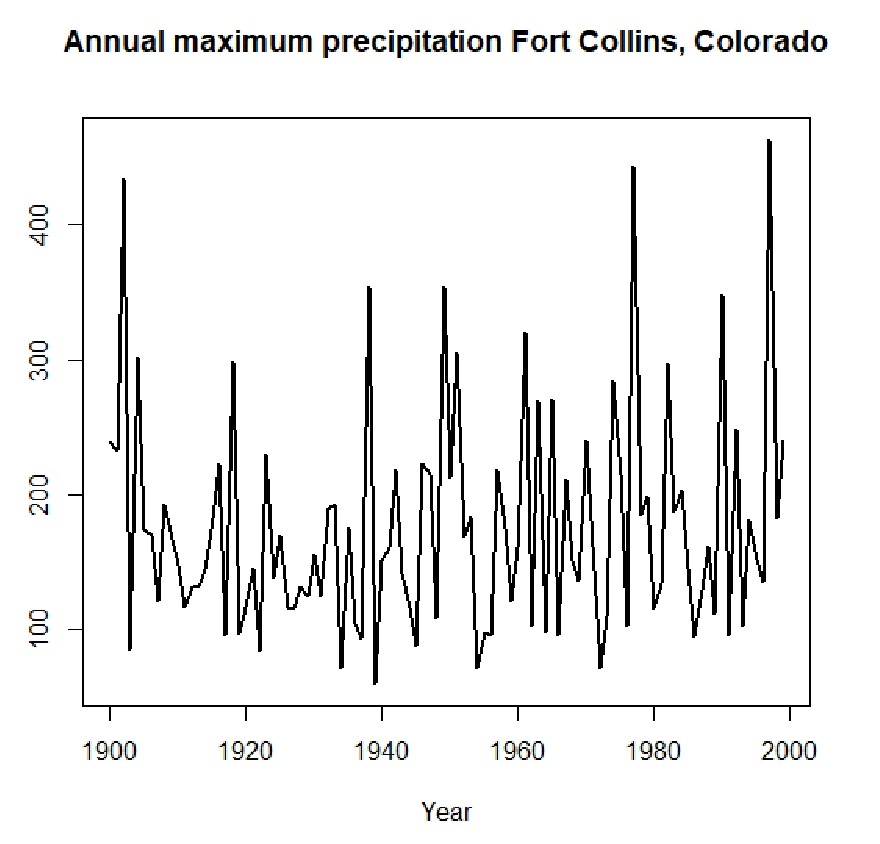
Modeling extreme stochastic phenomena associated with catastrophic temperatures, heat waves, earthquakes and destructive floods is an aspect of proactive mitigation of risk. Hydrologists, reliability engineers, meteorologist and researchers among other stakeholders are faced with the challenges of providing adequate model for fitting real life datasets from the extreme natural hazardous occurrences in our environment. Convoluted distributions (CD) and generalized extreme value (GEV) distribution for r- largest order statistics (r-LOS) have been some of the prominent existing techniques for modeling the extreme events. This study explored the properties of order statistics from the convoluted distribution as alternative procedure for analyzing the extreme maximum with the aim of obtaining superior modeling fit compared to some other existing techniques. The new procedure called MAXOS-G employed the potential properties of the Maximum Order Statistics (MAXOS) and the flexibilities of convoluted distributions where G is taken to beWeibull-Exponential Pareto (WEP) and the New Kumaraswamy-Weibull (NKwei) distributions. The maximum order statistics of the WEP distribution (MAXOS-WEP) and NKwei distribution (MAXOS-NKwei) was derived and applied to three datasets consisting of annual maximum flood discharges, annual maximum precipitation and annual maximum one-day rainfall. Some properties of the MAXOS-WEP was investigated including the moment, mean, variance, skewness, and kurtosis. Characterization of WEP distribution by the L-moment of maximum order statistics was presented and coefficient of L-variation, L-skewness and L-kurtosis were derived. The results from the application to three datasets using R-software justified the importance of this new procedure for modeling the maximum events. The MAXOS-NKwei and MAXOS-WEP models provide superior goodness-of-fit to the datasets than the WEP and NKwei distributions and better than some previously proposed convoluted distributions for modeling the datasets.
References
S. G. Coles An introduction to statistical modeling of extreme values , 2nd Edition, United States of America, John Wiley & Sons inc. New York (1971) 75.
E. Castillo, A. S. Hadi, N. Balajrishnan & J. M. Sarabia, Extreme Value and Related Models with Applications in Engineering and Science , New Jersey: John Wiley & Sons. (2005).
E. C. Pinheiro, & M. L. P. Ferrari, “A comparative review of generalizations of the Gumbel extreme value distribution with an application to wind speed data”, J Stat Comput Simul. https://doi.org/10.1080/00949655.2015.1107909.
J. Pickands, “Statistical inference using extreme order statistics”, Annals of Statistics 3 (1975) 131.
A. Akinsete, F. Famoye, & C. Lee, “Beta-Pareto distribution”, Statistics 42 (2008) 563.
V. Choulakin, & M. A. Stephens, “Goodness-of-fit for the generalized Pareto distribution”,Technometrics 43 (2001) 478.
E. Mahmoudi, “The beta generalized Pareto distribution with application to lifetime data”, Math. Comput. Simul. 81 (2011) 2430.
G. S. Mudhokar & A. D. Hutson, “Exponentiated Weibull family: Some properties and flood data application”, Commun. Stat.- Theory Method 25 (1996) 3083.
M. Bourguignon, R. B. Silva & G. M. Cordeiro, “The Weibull-G family of probability distributions”, Data Science Journal 12 (2014) 58.
M. H. Tahir, M. A. Hussain, G. M. Cordeiro, M. El-Morshedy & M. S.Eliwa, “A New Kumaraswamy Generalized Family of Distributions with Properties, Applications, and Bivariate Extension”, Mathematicsn (2020) 8 1989. https://doi.org/10.3390/math8111989
A. Alzaatreh, F. Famoye & C. Lee, “ Weibull-Pareto Distribution and its Applications”, Commun. Stat.- Theory Methods 429 (2013) 1673.
E. E. Akarawak, I. A. Adeleke & R. O. Okafor, “The Weibull-Rayleigh Distribution and its Properties”, Journal of Engineering Reseach 18 (2013) 56.
A, Ahmad, S. P. Ahmad & A. Ahmed, “Characterization and Estimation of Weibull Rayleigh Distribution with Applications to Life Time Data”, Appl. Math. Inf. Sci 5 (2017) 71.
G. M. Cordeiro & M. de Castro, “A new family of generalized distributions”, J. Stat. Comput. Simul. 81 (2011) 883.
G. M. Cordeiro, E. M. M. Ortega & S. Nadarajah, “The Kumaraswany Weibull distribution with application to failure data”, Journal of Franklin Institute 347 (2010) 1399.
M. M. Mansour, G. Aryal, A. Z. Afify & M. Ahmad, “The Kumaraswamy Exponentiated Frechet Distribution ”, Pak. J. Statist. 34 (2018) 177.
S. B. Chhetri, A. A. Akinsete, G. Aryal & H. Long, “ Kumaraswamy transmuted pareto distribution”, J. Stat. Distrib. Appl. 4 (2017). https://doi.org/10.1186/s40488-017-0065-4.
K. A. Al-Kadim & M. A. Boshi, “Exponential Pareto distribution ” Mathematical Theory and Modeling 3 (2013) 135.
A. Luguterah & S. Nasiru, “Transmuted Exponential Pareto distribution”, Far East Journal of Theoretical Statistics 50 (2015) 31.
I. Elbatal & G. Aryal, “A New Generalization of the Exponential Pareto Distribution”, J. Inf. Optim. Sci 38 (2017) 675.
H. A. Salem, “Exponentiated Exponential Pareto Distribution: Properties and Estimations”, Advances in applied statistical Sciences 57 (2019) 89.
G. Aryal, “On The Beta Exponential Pareto Distribution”, Stat. Optim. Inf. Comput (2019). https://doi.org/10.19139/soic-2310-5070-437.
N. I. Rashwan & M. M. Kamel, “ The Beta Exponential Pareto Distribution”, Far East Journal of Theoretical Statistics (2020). https://doi.org/10.17654/TS058020091
A. O. Adeyemi, E. E. Akarawak & I. A. Adeleke, “The gompertz exponential pareto distribution with the properties and applications to bladder cancer and hydrological datasets”, Commun. Sci. Technol. 6 (2021) 107.
M. G. Khalil, “A New Distribution for Modeling Extreme Values”, Data Science Journal 17 (2019) 481.
K. Pearson, “ Note on Francis Galton’s di erence problems”, Biometrika 1 (1902) 3901.
L. H. Tippet, “ On the Extreme individuals and the range of samples taken from a normal population”, Biometrika (1925) 364.
E. J. Gumbel, Statistics of extremes, Columbia University Press, New York (1958)
J. R. M. Hosking, “L moments Analysis and estimation of distributions using linear combinations of order statistics”, Journal of R Stat Soc Series B Stat Methodol 52 (1990) 105.
H. A. David & H. N. Nagaraja, Order Statistics, John Wiley, New York (2003).
B. C. Arnold, N. Balakrishnan & H. N. Nagaraja, A First Course in Order Statistics, SIAM, Philadelphia, PA. Original Edition, Wiley (1992).
P. Y. Thomas & P. Samuel, “Recurrence Relations for the Moments of Order Statistics from a Beta Distribution”, Statistical Papers 49 (2008) 139.
A. T. Bugatekin & M. Gurcan, “ Recurrence Relations for the Moments of Order Statistics from A Generalized Beta Distribution”, Asian Journal of Applied Sciences”, 2 (2014) 794.
D. Kumar, S. Dey, M. Nassar & P. Yadav, “The Recurrence Relations of Order Statistics Moments for Power Lomax Distribution”, Journal of Statistical Research 52 (2018) 75. https://doi.org/10.47302/jsr.2018520105.
J. G. Dar & H. Abdullah, “Order Statistics Properties of the Two Parameter Lomax distribution”, Pak. J. Stat. Oper. (2015). https://doi.org/10.181871/pjsor.v11i2.980.
R. A. Fisher & L. H. C. Tippett, “Limiting forms of the frequency distribution of the largest or smallest member of a sample”, Mathematical Proceedings of the Cambridge Philosophical Society Cambridge University Press 24 (1928) 180.
V. R. Mises, “’La distribution de la plus grandede nvaleurs; Rev., Math, Union Interbalcanique, 1, 141-160, Reproduced, Selected papers of von Mises”, Journal of American Mathematical Society 2 (1964) 271.
A. F. Jenkinson, “The frequency distribution of the annual maximum (or minimum) values of meteorological elements”, Q J R Meteorological Society 81 (1995) 158.
H. Sang & A. E. Gelfand, “ Hierarchical modeling for extreme values observed over space and time” , Environmental Ecology Statistics 16 (2009) 407.
X. L. Wang, B. Trewin Y, Feng & D. Jones, “Historical changes in Australian temperature extremes as inferred from extreme value distribution analyses”, Geophysical Resources Letters 40 (2013) 573.
https://doi.org/10.1002/grl.50132.
B. Bader, J. Yan & X. Zhang, “Automated selection of r for the r- largest order statistics approach is done with adjustment for sequential testing”, Statistics and Computing (2017). https://doi.org/10.1007/s11222-016-9697-3
C. G. Soares & M. G. Scotto, “Application of the r- largest-order statistics for long-term predictions of significant wave height”, Coastal Enginerring 51 (2004) 387.
R. L. Smith, “ Extreme value theory based on the r- largest annual events”, Journal of Hydrology 86 (1986) 27.
Y. An & M. D. Pandey, “The r largest order statistics model for extreme wind speed estimation”, J.f Wind Eng. Ind.l Aerodyn. 95 (2007) 165. https://doi.org/10.1016/j.jweia.2006.05.008.
R. S. Da Silva & F. F. do Nascimento, “Extreme Value Theory Applied to r Largest Order Statistics Under the Bayesian Approach”, Revista Colombiana de Estadstica 42 (2019) 143. http://dx.doi.org/10.15446/rce.v42n2.70271.
M. M. Nemukula & C. Sigauke, “Modelling average maximum daily temperature using r largest order statistics: An application to South African data”, Jamba (2018). https://doi.org/10.4102/jamba.v10i1.467.
M. Jones, “Families of distributions arising from distributions of order statistics”, Test 13 (2009) 1. https://doi.org/10.1007/BF02602999.
A. Alzaatreh, C. Lee & F. Famoye, “A new method for generating families of continuous distributions”, Metron 71 (2013) 63.
J. R. M. Hosking, “ On the characterization of distributions by their Lmoments”, Journal of Statistical Planning and Inference 136 (2006) 193.
M. A. Khaleel, P. E. Oguntunde, M. T. Ahmed, N. A. Ibrahim & Y. F Loh, “The gompertz flexible weibull distribution and its applications”, Malaysian J. Math. 14 (2020) 169.
A. F. Fagbamigbe, G.K. Basele, B. Makubate, & B.O. Oluyede, “Application of the Exponentiated Log-Logistic Weibull Distribution to Censored Data ”, J . Nig. Soc. Phys. Sci. 1 (2019) 12. https://doi.org/10.46481/jnsps.2019.4
R. W. Katz, M. B. Parlange & P. Naveau, “ Statistics of extremes in hydrology”, Advances in Water Resources 25 (2002) 1287.
A. Asgharzadeh, H. S. Bakouch & M. A. Habibi, “generalized binomial exponential 2 distribution: Modeling and applications to hydrologic events”, Journal of Applied Statistics 44 (2017) 2368.
PRISM Climate Group, Oregon State University, “ Time series values for individual locations”, (2019). http://prism.oregonstate.edu,Created: 2019-11-10.
C. Ball, B. Rimal & S. Chhetri, “A New Generalized Cauchy Distribution with an Application to Annual OneDay Maximum Rainfall Data”, Stat. Optim. Inf. Comput. 9 (2021) 123. https://doi.org/10.19139/soic-2310-5070-1000
B. Makubate, M. Matsuokwane, B. O. Oluyede, L. Gabaitiri & S. Chamunorwa, “The Type II Topp-Leone-G Power Series Distribution with Applications on Bladder Cancer”, J. Nig. Soc. Phys. Sci. 4 (2022) 848. https://doi.org/10.46481/jnsps.2022.848
Published
How to Cite
Issue
Section
Copyright (c) 2023 Adewunmi O. Adeyemi, Ismail A. Adeleke, Eno E. E. Akarawak

This work is licensed under a Creative Commons Attribution 4.0 International License.