Volume 2, Issue 4, November 2020
The physical sciences seek to explain the behaviour of matter, energy, and natural systems through observation, experimentation, and mathematical reasoning. From the structure of atomic nuclei to the dynamics of the Earth's ionosphere, scientific investigations depend on our ability to develop reliable models, obtain meaningful measurements, and interpret results within established theoretical frameworks. The six original research articles published in this issue of the Journal of the Nigerian Society of Physical Sciences (JNSPS) provide examples of these approaches across materials chemistry, numerical mathematics, geophysics, space physics, and nuclear science.
This issue is particularly significant because it brings together investigations conducted at markedly different physical scales. While some contributions examine the properties of engineered nanomaterials, others address the behaviour of nuclear systems, the response of the ionosphere to geomagnetic disturbances, and the identification of groundwater resources. Despite their differences, these investigations share a dependence on quantitative methods and the careful interpretation of scientific evidence.
Understanding Materials and Developing Computational MethodsThe physical and chemical properties of materials are closely related to their structural characteristics and the conditions under which they are produced. This relationship is especially important in nanomaterials research, where relatively small changes in composition, morphology, or synthesis conditions may influence material behaviour. Labulo and colleagues address this subject in Effect of benzophenone on the physicochemical properties of N-CNTs synthesized from 1-ferrocenylmethyl (2-methylimidazole) catalyst. The authors investigate nitrogen-doped carbon nanotubes synthesised through chemical vapour deposition, with particular attention to the influence of benzophenone on their physicochemical properties. The study contributes to the understanding of how chemical modifications and synthesis conditions affect carbon-based nanomaterials. Such investigations are relevant to the broader development of materials whose properties can be adjusted for specific scientific and technological applications.
Alongside experimental investigations, the development of reliable mathematical techniques remains essential to scientific progress. Differential equations arise naturally in the description of mechanical motion, transport processes, electrical systems, and many other physical phenomena. Higher-order differential equations can present additional computational challenges, particularly when numerical solutions must preserve acceptable accuracy over the interval of investigation.
In Numerical Algorithms for Direct Solution of Fourth Order Ordinary Differential Equations, Kuboye and colleagues develop hybrid numerical algorithms for solving fourth-order initial value problems directly. The investigation addresses an important aspect of numerical analysis: constructing computational methods that can treat higher-order equations without necessarily reducing them to systems of first-order equations. Research in this area contributes to the development of numerical techniques for mathematical models encountered in applied science and engineering.
The connection between these two contributions is methodological rather than disciplinary. Materials research requires dependable characterisation and interpretation, while numerical analysis requires algorithms whose mathematical properties justify their use. In both cases, confidence in the scientific findings depends on the suitability and reliability of the methods employed.
Geophysical Investigations: From the Ionosphere to the SubsurfaceThe Earth's physical environment consists of interacting systems operating across different spatial and temporal scales. Understanding these systems requires measurements capable of capturing variations in their properties and mathematical approaches for interpreting the observations.
Space weather provides a particularly important example. Geomagnetic disturbances can alter conditions in the ionosphere, affecting the distribution of charged particles and potentially influencing radio communication and satellite-based navigation systems. In GPS-TEC Variations over the African Low-latitude Ionosphere during March 2013 and 2015 Geomagnetic Storms, Ikubanni and colleagues investigate variations in ionospheric total electron content associated with geomagnetic storm events. Using observations from the East African sector, the authors examine ionospheric responses under disturbed geomagnetic conditions. The study contributes to the understanding of low-latitude ionospheric behaviour, a subject of continuing relevance because of the distinctive electrodynamic processes operating near the geomagnetic equator.
Closer to the Earth's surface, geophysical measurements provide essential information for understanding subsurface structures and identifying potential groundwater resources. The availability of groundwater depends on geological conditions, while geophysical responses may also be influenced by variations in moisture content and other environmental factors. These considerations make the interpretation of field measurements an important component of groundwater investigations.
Coker and colleagues examine this problem in Seasonal Comparison of Potential Groundwater Aquifer in Ijebu-Ife, South-West, Nigeria, using Dipole-Dipole Array and Electromagnetic Methods. The study employs integrated geophysical methods to investigate potential groundwater-bearing formations under different seasonal conditions. By considering both dry and wet periods, the research addresses the influence of seasonal variation on geophysical observations and their interpretation. The contribution highlights the value of combining measurement techniques when investigating subsurface conditions relevant to groundwater exploration.
The two geophysical studies illustrate an important characteristic of environmental research. Observations must be interpreted with reference to the physical processes responsible for the measured signals. Whether the quantity of interest is electron content in the ionosphere or electrical response in the subsurface, meaningful conclusions require an understanding of the conditions under which measurements are obtained.
Investigating Nuclear Structure and Radioactive DecayAt the nuclear scale, the interaction of constituent particles gives rise to phenomena that require both sophisticated theoretical descriptions and precise experimental measurements. Nuclear models are essential for understanding decay processes, while spectroscopic techniques provide information about excited nuclear states and their properties.
The contribution by Yahya, Alpha decay half-lives of 171-189Hg isotopes using Modified Gamow-like model and temperature dependent proximity potential, investigates alpha-decay half-lives in mercury isotopes using modified theoretical descriptions of nuclear barrier penetration. Alpha decay provides an important testing ground for models of nuclear interaction and radioactive transformation. The study considers the influence of different potential descriptions on calculated decay characteristics, contributing to the assessment of theoretical approaches used in nuclear physics.
A complementary experimental perspective is presented in Prompt Response Function (PRF) of Lifetime Measurement in the 2+ State of 192Os Nuclei Energy Levels from Triple-Gamma Coincidence Techniques, by Daniel and colleagues. The work addresses the prompt response function associated with nuclear lifetime measurements using gamma-ray coincidence techniques. Accurate determination of nuclear state lifetimes requires careful consideration of detector timing characteristics and instrumental response. Such measurements provide information relevant to nuclear structure and the interpretation of electromagnetic transitions between nuclear energy levels.
Together, these contributions demonstrate the complementary roles of theoretical modelling and experimental measurement in nuclear science. Mathematical descriptions provide estimates of nuclear properties, while experimental techniques allow those descriptions to be examined against observable quantities. The continued refinement of both approaches remains necessary for improving our understanding of nuclear systems.
Maintaining Scientific Quality in a Changing Research EnvironmentThe publication of this issue takes place during a period in which the COVID-19 pandemic has substantially affected academic and research activities across the world. Restrictions on physical interaction, difficulties in accessing laboratories, and disruptions to institutional activities have created challenges for researchers, particularly those whose investigations depend on experimental facilities and field measurements. These circumstances have also emphasised the importance of scientific communication and the continued exchange of research findings.
For JNSPS, the responsibility to maintain scholarly publishing during such a period must be balanced with an equally important obligation to preserve editorial quality. Changes in research circumstances should not weaken the standards by which scientific contributions are evaluated. The validity of mathematical derivations, the reliability of experimental observations, and the appropriateness of computational methods remain fundamental considerations in manuscript assessment.
As we conclude the second volume of the journal, our priorities continue to centre on scientific originality, methodological soundness, and research integrity. We recognise that a journal's contribution to science is determined not simply by the number of articles it publishes but by the reliability and lasting value of the knowledge it makes available. Careful peer review, transparent editorial procedures, and responsible scientific reporting will therefore remain essential elements of our publication process.
The range of subjects represented in this issue also reinforces our commitment to multidisciplinary scholarship. Theoretical investigations and experimental studies should not be viewed as competing approaches to scientific advancement. Rather, they provide complementary means of understanding nature. We shall continue to welcome manuscripts that address fundamental questions, develop improved analytical methods, investigate physical phenomena, and provide scientifically justified solutions to practical problems.
The completion of Volume 2 represents another stage in the development of the Journal of the Nigerian Society of Physical Sciences. I acknowledge the efforts of the authors, reviewers, and editorial team whose contributions have supported the publication of the journal throughout 2020. I also appreciate the continued support of the Nigerian Society of Physical Sciences in sustaining this scholarly initiative.
Our task in the years ahead is to consolidate the progress already made while remaining attentive to the changing demands of scientific research and scholarly communication. This requires an editorial culture in which the quality of evidence takes precedence over the attractiveness of a result, and where scientific conclusions remain open to critical examination.
The studies presented in this issue remind us that scientific progress is achieved through different but connected forms of inquiry. Whether investigating the properties of nanomaterials, developing numerical algorithms, examining the Earth's environment, or studying nuclear phenomena, the fundamental objective remains the same: to deepen our understanding of the physical world through rigorous and reproducible research. It is this commitment that will continue to guide the development of JNSPS.
B. J. Falaye
Editor-in-Chief, Journal of the Nigerian Society of Physical Sciences
November 15, 2020
Original Research
-
 1588 856 Cited —
Vertically-aligned nitrogen-doped carbon nanotubes (v-N-CNTs) were synthesized \textit{via} the chemical vapour deposition (CVD) technique. 1-ferrocenylmethyl(2-methylimidazole) was employed as the source …
-
 1606 1135 Cited —
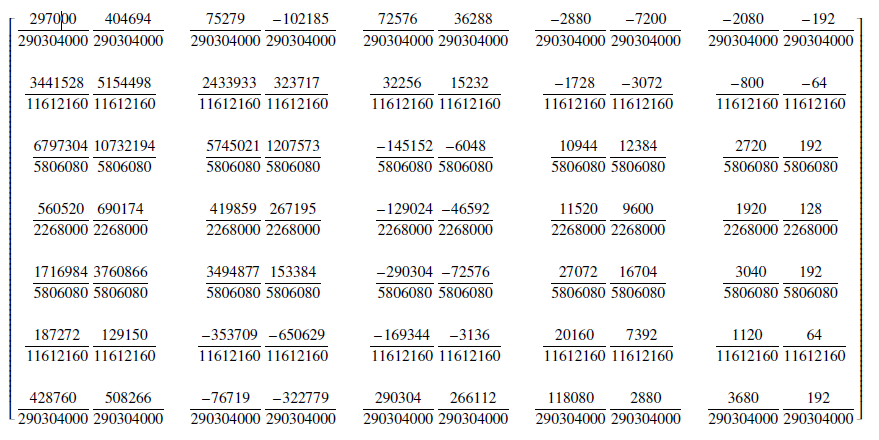
This paper examines the derivation of hybrid numerical algorithms with step length(k) of five for solving fourth order initial value problems of ordinary differential equations directly. In developing the …
-
 1056 768 Cited —
Intense geomagnetic storms offer opportunity to understand ionospheric response to space weather events. Using Total Electron Content (TEC) data from stations along the east African sector, the two most …
-
 1222 758 Cited —
Seasonal comparison of potential groundwater aquifer unit using integrated geophysical methods at Ijebu-Ife, Ogun State, South-west, Nigeria was investigated. The fieldwork employed two seasons (dry and …
-
 1584 1014 Cited —
The alpha decay half-lives for $^{171-189}\mathrm{Hg}$ isotopes have been computed using the Gamow-like model (GLM), modified Gamow-like model (MGLM1), temperature-independent Coulomb and proximity …
-
 1382 746 Cited —
The effective prompt response function full width at half maximum, PRF FWHM of 637 ps (obtained from the prompt gamma pairs of 477 keV and 700 keV associated with the yrast 2+ state in …