Volume 1, Issue 2, May 2019
We are pleased to present the second issue of the Journal of the Nigerian Society of Physical Sciences (JNSPS), Volume 1, Issue 2, May 2019. Following the successful publication of our inaugural issue, we remain committed to providing a platform for the dissemination of original scientific research across mathematics, statistics, physics, astronomy, chemistry, earth sciences, computer science, and related interdisciplinary fields.
Scientific advancement depends on the continuous development of theoretical understanding, experimental techniques, and computational methods. These approaches complement one another in addressing fundamental scientific questions and practical challenges. As research problems become increasingly complex, collaboration across disciplines remains essential for developing reliable methods, improving existing technologies, and extending the boundaries of scientific knowledge.
This issue features five original research articles covering fixed point theory in Banach spaces, geophysical modelling, numerical methods for differential equations, and the simulation and optimisation of perovskite solar cells. The contributions demonstrate the importance of mathematical rigour and computational analysis in both fundamental and applied scientific investigations.
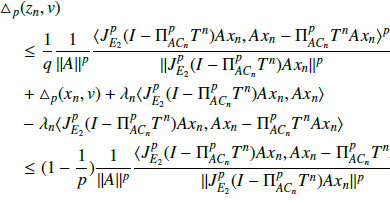
The first article, Strong Convergence Theorems for Split Common Fixed Point Problem of Bregman Generalized Asymptotically Nonexpansive Mappings in Banach Spaces, by Ibrahim, introduces an iterative scheme and establishes strong convergence results for a class of split common fixed point problems in Banach spaces. The study contributes to the mathematical theory of iterative approximation methods and provides further insight into convergence properties associated with nonlinear mappings. Such investigations remain important in functional analysis, optimisation, and related mathematical applications.
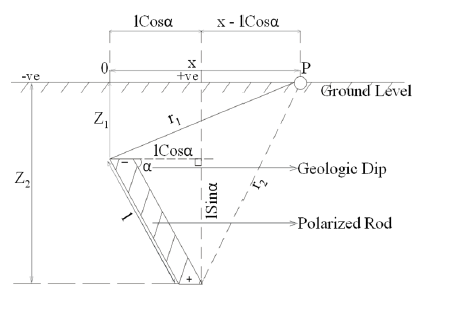
The second contribution, Modeling of Self Potential (SP) Anomalies over a Polarized Rod with Finite Depth Extents, by Fagbemigun and colleagues, examines the modelling of self-potential anomalies associated with a subsurface polarised rod. Geophysical modelling provides a useful means of understanding the expected responses of subsurface structures before field measurements are undertaken. This work contributes to the interpretation of electrical potential anomalies and highlights the relevance of theoretical modelling in geophysical exploration and subsurface investigations.
The third article, Numerical Simulation of Sandwiched Perovskite-Based Solar Cell Using Solar Cell Capacitance Simulator (SCAPS-1D), by Bello and colleagues, investigates the performance of a perovskite-based solar cell using numerical simulation. Perovskite materials have attracted considerable research interest because of their promising optoelectronic properties and potential applications in photovoltaic technologies. The study demonstrates how computational tools can be used to investigate solar cell characteristics and assess factors influencing device performance.
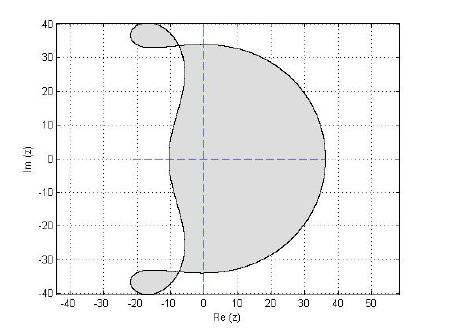
The fourth paper, A Class of Block Multi-derivative Numerical Techniques for Singular Advection Equations, by Ogunniran, addresses the numerical solution of differential equations involving singularities. Such equations can present considerable mathematical and computational difficulties, particularly when conventional numerical procedures are inadequate. The study contributes to the development of multi-derivative numerical techniques for solving singular advection equations and illustrates the continuing importance of numerical analysis in mathematical modelling.
The final article, Simulation and Optimization of Lead-Based Perovskite Solar Cells with Cuprous Oxide as a P-type Inorganic Layer, by Eli and colleagues, investigates the use of cuprous oxide as an inorganic hole-transporting layer in lead-based perovskite solar cells. The selection of suitable charge transport materials is an important consideration in photovoltaic device performance and stability. Through simulation and optimisation, the study examines material and device characteristics relevant to improving the performance of perovskite solar cells.
Collectively, the five articles reflect the complementary roles of theoretical mathematics, numerical computation, and physical modelling in scientific research. While the contributions address different problems, they share a common emphasis on the use of systematic mathematical and computational approaches to investigate complex systems. The two studies on perovskite solar cells also demonstrate the growing relevance of computational materials research to the development of renewable energy technologies.
As the Journal of the Nigerian Society of Physical Sciences continues to develop, our editorial priority remains the publication of original, scientifically sound, and carefully evaluated research. We recognise that the credibility of a scholarly journal rests on the quality of its published contributions and the integrity of its editorial and peer-review processes. We shall therefore continue to encourage rigorous scientific investigation, clear presentation of research methods, and conclusions that are adequately supported by the evidence presented.
We sincerely appreciate the authors whose contributions have made this issue possible, the reviewers who devoted their time and expertise to the assessment of manuscripts, and the members of the editorial team for their continued commitment to the journal. We also acknowledge the support of the Nigerian Society of Physical Sciences in sustaining this initiative and promoting scholarly communication within the scientific community.
We encourage researchers in Nigeria and across the world to continue submitting original research that advances scientific understanding and addresses important theoretical and practical questions. Through sustained commitment to research quality, editorial independence, and scientific integrity, we hope to strengthen the position of JNSPS as a platform for the dissemination of valuable scientific contributions.
We welcome readers to the second issue of the Journal of the Nigerian Society of Physical Sciences and look forward to the continued advancement of scientific knowledge through the contributions of our research community.
B. J. Falaye
Editor-in-Chief, Journal of the Nigerian Society of Physical Sciences
May 2019
Original Research
-
 1312 650 Cited —
In this paper, a new iterative scheme is introduced and also strong convergence theorems for solving split common fixed point problem for uniformly continuous Bregman generalized asymptotically …
-
 1288 623 Cited —
Modeling is a powerful tool used by Geoscientists to provide pre-knowledge about the expectations of any geophysical field measurements. This study generates Self Potential (SP) anomalies over a typical …
-
 2128 1179 Cited —
Due to the superb characteristics of its light-harvesting, the Perovskite sensitizer ABX3 (A = CH3NH3, B = Pb, Sn, and X = Cl, Br, I) has recently attracted great …
-
 1084 606 Cited —
The integration of some differential equations is hard to acquire because of the presence of singular point(s) in these equations. These equations are best solved by some unique technique. Multi-derivative …
-
 1972 928 Cited —
The hole transporting material (HTM) is responsible for selectively transporting holes and blocking electrons which also plays a crucial role in the efficiency and stability of perovskite solar cells …