Volume 2, Issue 2, May 2020
The strength of the physical sciences lies in their ability to describe natural phenomena through measurable quantities, mathematical relationships, and experimentally testable predictions. A physical system may involve the motion of a single charged particle, the transport of chemical species, the interaction of the Earth's atmosphere with solar radiation, or the conversion of sunlight into electrical energy. Although these problems differ considerably in scale and application, their investigation relies on a common foundation of mathematical reasoning, physical principles, and quantitative analysis.
This connection between fundamental physics and applied mathematics is evident in the second issue of Volume 2 of the Journal of the Nigerian Society of Physical Sciences (JNSPS). The six original research articles published in this issue address ion confinement, transport phenomena, numerical solutions of differential equations, ionospheric variability, photovoltaic systems, and nonlinear oscillations. The contributions demonstrate how established mathematical and physical principles can be developed into useful methods for investigating complex scientific problems.
The opening contribution, Energy distribution of an ion cloud in a quadrupole Penning Trap, by Dyavappa, examines the behaviour of charged particles confined within a Penning trap. Such devices employ a combination of electric and magnetic fields to restrict particle motion, with electrostatic confinement acting along the axial direction and magnetic confinement governing the radial motion. Understanding the energy distribution of confined ions is relevant to investigations in atomic and plasma physics, precision measurements, and charged-particle dynamics. The study provides a theoretical perspective on the behaviour of ion ensembles under controlled electromagnetic conditions and illustrates the importance of classical electrodynamics in the analysis of particle confinement systems.
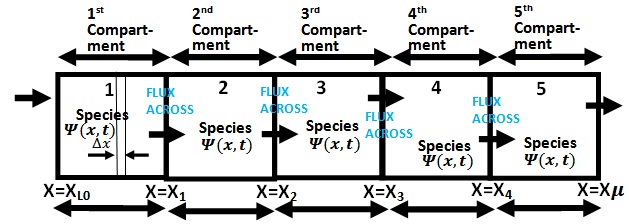
The movement of particles and chemical species also presents important mathematical questions in transport theory. In Mathematical modelling of concentration profiles for species transport through the single and the interconnected multiple-compartment systems, Adedire and Ndam investigate concentration distributions in compartmental systems involving the movement of chemical species through separating boundaries. Compartmental models provide a means of representing transport processes in which material exchange occurs between connected regions. Their applications extend to chemical engineering, environmental science, biological transport, and other systems governed by diffusion and reaction processes. The contribution demonstrates how mathematical descriptions can be used to examine concentration changes and the influence of system configuration on transport behaviour.
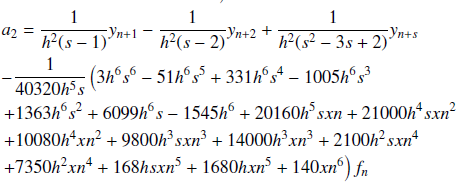
A central difficulty in mathematical modelling is that many differential equations arising from scientific problems do not possess solutions that can be expressed conveniently in closed analytical form. This makes the development of accurate and computationally efficient numerical techniques an essential part of applied mathematics. Kuboye and colleagues address this subject in Solving third order ordinary differential equations directly using hybrid numerical models. Their work develops numerical methods for third-order initial value problems using multistep collocation techniques. Rather than relying exclusively on the reduction of higher-order equations into first-order systems, direct numerical methods provide alternative procedures for obtaining approximate solutions. The investigation contributes to the continuing development of numerical algorithms for differential equations encountered in physical and engineering applications.
Beyond laboratory and mathematical systems, the Earth's ionosphere provides an important natural environment for investigating the interaction between solar radiation, charged particles, and the geomagnetic field. Variations in ionospheric electron density influence the propagation of electromagnetic signals and are particularly relevant to satellite navigation and communication technologies.
In Inter-Hemispheric Comparison of Ionospheric TEC Variation at Each Latitudinal Band During Quiet Geomagnetic Condition, Adebiyi and colleagues examine total electron content variations across selected latitudinal regions in the Northern and Southern Hemispheres under quiet geomagnetic conditions. The study considers the spatial and temporal behaviour of ionospheric electron content and contributes to understanding how ionospheric conditions differ between geographic regions. Such investigations are valuable because the establishment of quiet-time ionospheric characteristics provides a reference for examining disturbances associated with geomagnetic activity and other space-weather phenomena.
Energy conversion represents another field in which physical modelling plays a direct role in technological development. Photovoltaic devices convert incident solar radiation into electrical energy, but their output depends on several factors, including operating voltage, current, temperature, illumination, and device characteristics. Identifying operating conditions that maximise electrical power is therefore an important problem in photovoltaic system analysis.
Alfa and colleagues investigate this subject in Optimal Power Point on the I-V Curve of a Photovoltaic Solar System (Modelling and Analysis). The authors examine the relationship between current, voltage, and power generation in photovoltaic systems using mathematical modelling. Their analysis addresses the determination of operating conditions associated with maximum power output. The study demonstrates the relevance of quantitative modelling to photovoltaic performance assessment and the wider effort to improve the efficiency of solar energy utilisation.
The final contribution returns to the mathematical investigation of nonlinear dynamical systems. Nonlinear differential equations frequently describe oscillatory phenomena whose behaviour cannot be adequately represented by simple linear approximations. The van der Pol equation is a well-established example, providing a mathematical description of nonlinear oscillations and self-sustained dynamical behaviour.
In Comparison of the Solution of the Van der Pol Equation Using the Modified Adomian Decomposition Method and Truncated Taylor Series Method, Ndam and Adedire examine two approaches to obtaining approximate solutions of the van der Pol equation. By comparing the modified Adomian decomposition method with a truncated Taylor series approach, the study addresses the performance of analytical approximation techniques in the treatment of nonlinear differential equations. Such comparisons are important because the suitability of an approximation method depends on its ability to reproduce the behaviour of the underlying system within an acceptable range of accuracy.
Scientific Research in a Period of Global DisruptionThe publication of this issue coincides with an extraordinary period in modern scientific history. The emergence of COVID-19 and its rapid progression into a global pandemic have significantly disrupted academic activities, laboratory investigations, scientific conferences, and international research collaboration. Universities and research institutions across many countries have introduced restrictions that have altered the conditions under which scientific work is conducted.
These developments have reinforced the importance of mathematical modelling, computational methods, and reliable scientific communication. Although the research articles in this issue do not directly address the pandemic, they demonstrate the breadth of quantitative techniques that remain central to scientific investigation. Differential equations, numerical algorithms, statistical reasoning, and computational modelling are among the mathematical tools that allow researchers to investigate complex systems across disciplines.
The current circumstances also raise important questions about the continuity of research activities and the responsibilities of scholarly publishers. Scientific communication must remain active even when conventional academic interactions become difficult. At the same time, the need to disseminate research should not compromise the standards of scientific evaluation. The urgency of publication cannot replace the careful verification of methods, results, and conclusions.
For the Journal of the Nigerian Society of Physical Sciences, these considerations strengthen our commitment to responsible editorial practice. We recognise that the usefulness of a scientific publication depends on the confidence readers can place in its findings. Manuscripts must therefore be assessed according to their originality, methodological validity, clarity of presentation, and contribution to existing knowledge. Whether a study is theoretical, computational, or experimental, its conclusions should follow logically from the evidence and analysis presented.
The diversity of research represented in this issue also illustrates why multidisciplinary scientific publishing remains valuable. Advances in numerical mathematics may support future investigations in physics and engineering. Studies of electromagnetic systems can contribute to improved measurement techniques, while mathematical descriptions of transport processes may inform research in chemistry, biology, and environmental science. The exchange of methods and ideas across disciplinary boundaries creates opportunities for scientific progress that may not emerge from isolated investigations.
As JNSPS continues its second year of publication, we shall seek to preserve this breadth while maintaining clear expectations concerning scientific quality. Our intention is to provide a scholarly platform in which fundamental research and practical applications receive appropriate consideration, provided that the investigations are carefully conducted and their findings contribute meaningfully to the scientific literature.
I acknowledge the contributions of the authors whose research appears in this issue, as well as the reviewers who have undertaken the important responsibility of evaluating the manuscripts. I also appreciate the continuing efforts of the editorial team and the support of the Nigerian Society of Physical Sciences. Their commitment is particularly valuable at a time when academic and research activities face unusual challenges.
The present circumstances remind us that scientific progress requires both intellectual commitment and institutional resilience. The pursuit of knowledge must continue despite difficulties, supported by collaboration, critical evaluation, and responsible communication of research findings.
As we publish this second issue of Volume 2, I hope that its contributions will encourage further investigation into the mathematical and physical principles governing natural and technological systems. The value of scientific research lies not only in answering existing questions but also in providing the methods, evidence, and understanding from which new questions can emerge.
B. J. Falaye
Editor-in-Chief, Journal of the Nigerian Society of Physical Sciences
May 13, 2020
Original Research
-
 1423 637 Cited —
Ions are confined in Penning trap by the combination of electric field and magnetic field, as the electric field confines ions in the axial direction through an electric potential minimum and the magnetic …
-
 764 133 Cited —
In this research work, we investigate the concentration profiles in the single and the interconnected multiple-compartment systems with sieve partitions for the transport of chemical species with second …
-
 12414 1308 Cited —
In this work, numerical methods for solving third order initial value problems of ordinary differential equations are developed. Multi-step collocation is used in deriving the methods, where power series …
-
 1504 714 Cited —
This paper compares the quiet time variation of the Total Electron Content (TEC) over four stations located at high and mid latitudes in the northern and southern hemispheres of the African-European …
-
 941 120 Cited —
Motivated by recent interest in improving the performance of PV cells, we explored the optimal power point in Photovoltaic (PV) cells by using three different topologies to compare its function and …
-
 1517 784 Cited —
In this paper, we compare the solution of the van der Pol equation obtained by using the truncated Taylor series method and the modified Adomian decomposition method with the solution obtained by the …