Volume 1, Issue 4, November 2019
The relationship between fundamental scientific research and technological development remains central to the advancement of modern science. Mathematical theories provide the foundation for understanding complex systems, computational methods allow researchers to investigate phenomena that may be difficult to examine experimentally, and advances in materials science continue to create opportunities for developing new technologies. The contributions presented in this issue of the Journal of the Nigerian Society of Physical Sciences (JNSPS) reflect these connections and demonstrate the importance of maintaining a broad perspective in scientific investigation.
Volume 1, Issue 4 brings together four original research articles and one review article covering software engineering, computational materials science, fractional calculus, bioelectrochemical energy conversion, and applied geophysics. Although the studies address different scientific questions, they illustrate how mathematical reasoning, systematic investigation, and the development of appropriate research methods contribute to scientific progress.
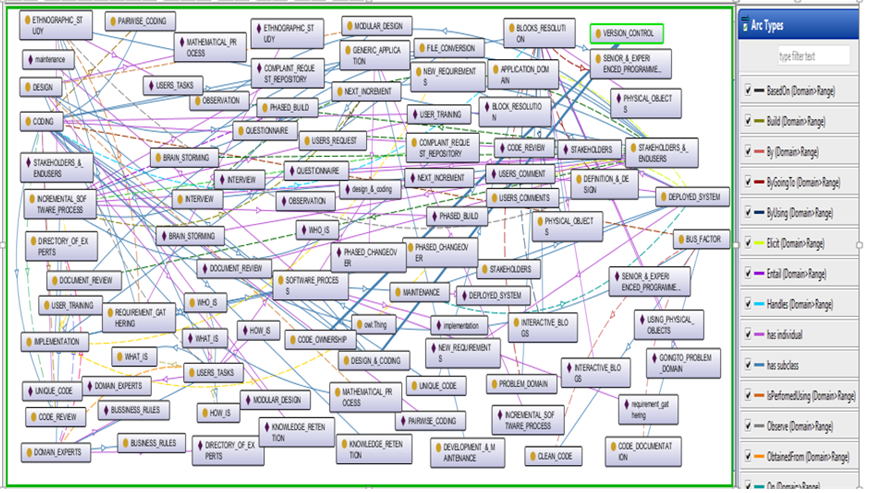
One of the fundamental requirements of scientific and technological development is the effective organisation and application of knowledge. This is particularly important in software engineering, where development processes involve interconnected activities, procedures, and information. In Software Process Ontology: A case study of software organisations software process sub domains, Oveh and colleagues investigate the formal representation of knowledge within software process environments. Their work considers the use of ontological structures to organise concepts and relationships within software process subdomains. Beyond its immediate application, the study draws attention to the importance of knowledge representation in improving the consistency and accessibility of information within complex technical systems.
Computational approaches have also become indispensable in materials research, particularly where the properties of a material must be understood before its suitability for a particular application can be assessed. Shamsudeen and colleagues, in First-principles calculations of Fluorine-doped Titanium dioxide: A prospective material for solar cells application, employ density functional theory to investigate the structural and electronic properties of fluorine-doped anatase titanium dioxide. The study examines the influence of doping on material characteristics relevant to photovoltaic applications. Research of this nature illustrates the usefulness of quantum-mechanical calculations in evaluating candidate materials and guiding subsequent experimental investigations.
The importance of mathematical methods is further demonstrated in Solution of Fractional Order Equations in the Domain of the Mellin Transform, where Fadugba considers the application of the Mellin transform to fractional-order equations. Fractional calculus extends conventional differential and integral operators and provides a mathematical framework for investigating systems whose behaviour cannot always be adequately represented by integer-order models. The development of analytical techniques for such equations remains an important aspect of applied mathematics. By examining solutions within the Mellin transform domain, this contribution adds to the available mathematical approaches for treating fractional differential equations.
Energy research constitutes another important direction represented in this issue. The demand for alternative methods of energy generation has encouraged investigations into systems capable of converting chemical and biochemical energy into electrical power. In Optimization of Method and Components of Enzymatic Fuel Cells, Akinsola and colleagues examine methods and components associated with enzymatic fuel cells. These systems employ enzymes as biological catalysts in electrochemical reactions and offer an interesting approach to energy conversion using biochemical fuels. The study addresses aspects of fuel cell optimisation, reflecting the need to understand how material selection, system configuration, and operating methods influence device performance.
While the original research articles primarily address specific theoretical or technological problems, the review contribution considers an established experimental approach used in investigating the Earth's subsurface. In Review of top notch electrode arrays for geoelectrical resistivity surveys, Ohaegbuchu and colleagues examine electrode configurations employed in electrical resistivity measurements. The choice of electrode arrangement has important implications for survey design, sensitivity to subsurface structures, and the interpretation of geophysical observations. By bringing together information on commonly used arrays, the review provides a useful resource for researchers and practitioners undertaking geoelectrical investigations.
An important observation from these contributions is that scientific advancement does not necessarily follow a single methodological direction. Theoretical mathematics, computational simulations, experimental optimisation, knowledge representation, and methodological reviews each address different aspects of scientific inquiry. Their relevance lies in the questions they investigate, the reliability of their methods, and the extent to which their findings contribute to existing knowledge. A multidisciplinary journal should therefore provide an environment in which different scientific approaches can be evaluated according to the standards appropriate to their respective disciplines.
The publication of this fourth issue also marks the completion of the first volume of JNSPS. When the journal commenced publication in February 2019, our primary objective was to establish a scholarly platform through which researchers in Nigeria and the wider international community could communicate original findings across the physical sciences and related fields. The completion of four issues within this inaugural year represents an encouraging beginning and provides a foundation upon which the journal can continue to develop.
However, the establishment of a journal is only the beginning of a much longer responsibility. Sustaining its relevance requires more than maintaining a regular publication schedule. It demands careful assessment of scientific contributions, consistency in editorial decisions, adherence to research ethics, and a willingness to improve publishing practices as scholarly standards evolve. The value of a scientific journal must ultimately be measured by the credibility of its publications and their contributions to the advancement of knowledge.
As Editor-in-Chief, I consider the preservation of scientific integrity to be fundamental to the future of JNSPS. Every manuscript should be assessed on the strength of its research question, the suitability of its methodology, the validity of its analysis, and the extent to which its conclusions are supported by the findings. Originality remains essential, but it must be accompanied by scientific rigour, clarity, and responsible reporting. These principles will continue to guide our editorial decisions as the journal develops.
The completion of our first volume would not have been possible without the contributions of several individuals and groups. I acknowledge the researchers who submitted their work during the journal's inaugural year, particularly those who placed their confidence in a newly established publication. I also appreciate the reviewers who offered their expertise in evaluating manuscripts and the editorial team whose efforts contributed to the preparation and publication of the four issues. The continued support of the Nigerian Society of Physical Sciences has been essential in providing the institutional foundation for this initiative.
Looking towards the next volume, our attention will remain focused on strengthening the scientific content of the journal, improving its editorial processes, and encouraging contributions from a wider research community. We intend to promote research that advances fundamental scientific understanding while remaining receptive to interdisciplinary investigations and studies addressing practical scientific and technological problems.
The first year of JNSPS has established a starting point rather than a final achievement. The responsibility before us is to build a journal whose scientific contributions remain valuable beyond the year in which they are published. This will require sustained commitment from authors, reviewers, editors, and the broader scientific community.
As we conclude Volume 1 of the Journal of the Nigerian Society of Physical Sciences, I express my appreciation to everyone who has contributed to its establishment. I look forward to the continued development of JNSPS as a journal distinguished by scientific quality, editorial integrity, and meaningful contributions to the advancement of knowledge.
B. J. Falaye
Editor-in-Chief, Journal of the Nigerian Society of Physical Sciences
November 30, 2019
Original Research
-
 1021 806 Cited —
In a domain like software process that is intensively knowledge driven, transforming intellectual knowledge by formal representation is an invaluable requirement. An improved use of this knowledge could …
-
 1276 902 Cited —
This study focuses on the anatase TiO2 doped Fluorine to investigate their structural and electronics properties using Density Functional Theory (DFT) within generalized gradient approximation …
-
 1188 881 Cited —
This paper presents the Mellin transform for the solution of the fractional order equations. The Mellin transform approach occurs in many areas of applied mathematics and technology. The Mellin transform …
-
 933 680 Cited —
Enzymatic fuel cells produce electrical power by oxidation of renewable energy sources. An enzymatic glucose biofuel cell uses glucose as fuel and enzymes as biocatalyst, to convert biochemical energy into …
Review Article
-
 1060 1431 Cited —
The different arrangements of electrodes used in geoelectrical resistivity surveys and measurements are referred to as electrode arrays. In this review, we have revisited most of the widely used electrode …