SAE-IF: A hybrid sparse autoencoder–isolation forest framework for real-time credit-card fraud detection and sustainable digital-economy protection
Keywords:
Credit-card fraud detection, Sparse autoencoder, Isolation forest, Semi-supervised anomaly detection, Digital-payment securityAbstract
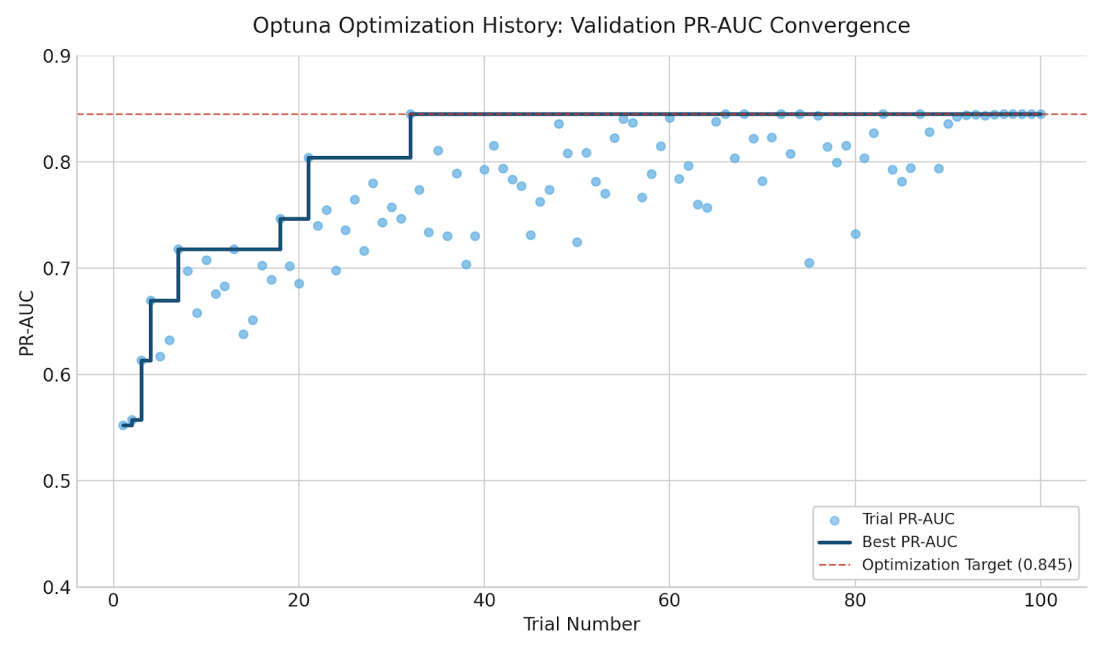
The rapid expansion of online payments and e-commerce has increased exposure to credit-card fraud and related financial crimes, threatening the security and stability of digital economies. Conventional supervised detectors require labelled fraud data, which are scarce and highly imbalanced. This study presents SAE-IF, a hybrid semi-supervised framework that combines a sparse autoencoder (SAE) with an isolation forest (IF) for anomaly detection in credit-card transactions. The SAE learns latent representations from transaction features without using class labels in its reconstruction objective, while labels are used for resampling, validation, fusion-weight optimisation, and threshold selection. A leakage-aware protocol employs stratified data splitting, robust feature scaling, and Bayesian hyperparameter optimisation with Optuna. The framework is evaluated on the ULB/Kaggle credit-card dataset, the IEEE-CIS Fraud Detection dataset, and the PaySim mobile-money dataset. SAE-IF achieved precision--recall area under the curve (PR-AUC) values of 0.832, 0.801, and 0.845, respectively, while maintaining precision above 0.90 and low false-positive counts. On a standard central processing unit, mean offline inference latency was 1.41 ± 0.23 ms per transaction. These results indicate that combining representation learning with anomaly detection can provide accurate and computationally feasible fraud screening in label-scarce financial environments, subject to validation on production infrastructure.
References
[1] F. A. Almarshad, M. Zakariah & G. A. Gashgari, ``RABEM: Risk-adaptive Bayesian ensemble model for fraud detection'', Scientific Reports 15 (2025) 36796. https://doi.org/10.1038/s41598-025-20651-0.
[2] S. Sukumaran, ``AI-driven payment security: Enhancing fraud detection in digital transactions'', World Journal of Advanced Research and Reviews 26 (2025) 3017. https://doi.org/10.30574/wjarr.2025.26.1.1398.
[3] V. Laxman, N. Ramesh, S. K. Jaya Prakash & R. Aluvala, ``Emerging threats in digital payment and financial crime: A bibliometric review'', Journal of Digital Economy 3 (2024) 205. https://doi.org/10.1016/j.jdec.2025.04.002.
[4] W. Hilal, S. A. Gadsden & J. Yawney, ``Financial fraud: A review of anomaly detection techniques and recent advances'', Expert Systems with Applications 193 (2022) 116429. https://doi.org/10.1016/j.eswa.2021.116429.
[5] O. Akinnagbe & A. Taiwo, ``The impact of machine learning on fraud detection in digital payment'', Asian Journal of Science, Technology, Engineering, and Art 3 (2025) 191. https://doi.org/10.58578/ajstea.v3i2.4900.
[6] P. M. Preciado Martínez, R. F. Reier Forradellas, L. M. Garay Gallastegui & S. L. Náñez Alonso, ``Comparative analysis of machine learning models for the detection of fraudulent banking transactions'', Cogent Business & Management 12 (2025) 2474209. https://doi.org/10.1080/23311975.2025.2474209.
[7] A. A. Compagnino, Y. Maruccia, S. Cavuoti, G. Riccio, A. Tutone, R. Crupi & A. Pagliaro, ``An introduction to machine learning methods for fraud detection'', Applied Sciences 15 (2025) 11787. https://doi.org/10.3390/app152111787.
[8] M. A. Mozumder, M. B. H. Sakil, M. R. Hasan, M. A. Hasan, K. M. N. Fuad, M. F. Mridha, M. R. Islam & Y. Watanobe, ``Hybrid contrastive learning with attention-based neural networks for robust fraud detection in digital payment systems'', IEEE Open Journal of the Computer Society 6 (2025) 1053. https://doi.org/10.1109/OJCS.2025.3581950.
[9] Y. Chen, C. Zhao, Y. Xu & C. Nie, ``Year-over-year developments in financial fraud detection via deep learning: A systematic literature review'', arXiv (2025) 2502.00201. https://doi.org/10.48550/arXiv.2502.00201.
[10] Y. Chen, C. Zhao, Y. Xu, C. Nie & Y. Zhang, ``Deep learning in financial fraud detection: Innovations, challenges, and applications'', Data Science and Management 9 (2026) 100162. https://doi.org/10.1016/j.dsm.2025.08.002.
[11] D. Ampumuza, C. Katushabe & M. Tamale, ``A systematic review and future directions for AI-driven detection of fraud patterns in SACCO transactions'', Frontiers in Artificial Intelligence 8 (2026) 1690482. https://doi.org/10.3389/frai.2025.1690482.
[12] H. Feng, Y. Yi, W. Xu, Y. Wu, S. Long & Y. Wang, ``Intelligent credit fraud detection with meta-learning: Addressing sample scarcity and evolving patterns'', 2nd International Conference on Digital Economy and Computer Science, Wuhan, China 2025, pp. 369--375. https://doi.org/10.1145/3785706.3785765.
[13] M. Zavvar, M. Jafari, N. M. Pour, A. A. Kiaei, M. H. Zavvar, A. Heidari & N. J. Navimipour, ``A hybrid deep learning framework using synthetic oversampling, autoencoder, convolutional neural networks, and an attention mechanism for credit card fraud detection'', Journal of Big Data 13 (2026) 21. https://doi.org/10.1186/s40537-025-01331-2.
[14] B. Chugh, N. Malik, D. Gupta & B. S. Alkahtani, ``A probabilistic approach-driven credit-card anomaly detection with CBLOF and isolation forest models'', Alexandria Engineering Journal 114 (2025) 231. https://doi.org/10.1016/j.aej.2024.11.054.
[15] F. Thiong'o, L. Nderu, R. W. Mwangi & I. N. Oteyo, ``HADA: A hybrid anomaly detection approach using unsupervised machine learning'', Engineering Reports 8 (2026) e70696. https://doi.org/10.1002/eng2.70696.
[16] T. Albalawi & S. Dardouri, ``Enhancing credit card fraud detection using traditional and deep learning models with class imbalance mitigation'', Frontiers in Artificial Intelligence 8 (2025) 1643292. https://doi.org/10.3389/frai.2025.1643292.
[17] D. Ziminski & E. Liddell-Quintyn, ``Preventing and mitigating fraudulent research participants in online qualitative violence and injury prevention research'', BMJ Open Quality 14 (2025) e003706. https://doi.org/10.1136/bmjoq-2025-003706.
[18] E. A. L. M. Btoush, X. Zhou, R. Gururajan, K. C. Chan, R. Genrich & P. Sankaran, ``A systematic review of literature on credit card cyber fraud detection using machine and deep learning'', PeerJ Computer Science 9 (2023) e1278. https://doi.org/10.7717/peerj-cs.1278.
[19] D. Cheng, Y. Zou, S. Xiang & C. Jiang, ``Graph neural networks for financial fraud detection: A review'', Frontiers of Computer Science 19 (2025) 199609. https://doi.org/10.1007/s11704-024-40474-y.
[20] T.-H. Lin & J. R. Jiang, ``Credit-card fraud detection with autoencoder and probabilistic random forest'', Mathematics 9 (2021) 2683. https://doi.org/10.3390/math9212683.
[21] E. Btoush, X. Zhou, R. Gururajan, K. C. Chan & O. Alsodi, ``Achieving excellence in cyberfraud detection: A hybrid ML+DL ensemble approach for credit cards'', Applied Sciences 15 (2025) 1081. https://doi.org/10.3390/app15031081.
[22] J. Adejoh, N. Owoh, M. Ashawa, S. Hosseinzadeh, A. Shahrabi & S. Mohamed, ``An adaptive unsupervised learning approach for credit-card fraud detection'', Big Data and Cognitive Computing 9 (2025) 217. https://doi.org/10.3390/bdcc9090217.
[23] N. V. Chawla, K. W. Bowyer, L. O. Hall & W. P. Kegelmeyer, ``SMOTE: Synthetic minority over-sampling technique'', Journal of Artificial Intelligence Research 16 (2002) 321. https://doi.org/10.1613/jair.953.
[24] E. K. Y. Yapp & H.-Y. Yeh, ``An extensive experimental comparison of machine- and deep-learning methods for credit and bank fraud detection'', Finance Research Letters 88 (2026) 109190. https://doi.org/10.1016/j.frl.2025.109190.
[25] S. Iqbal, K. M. Awan, S. Kamal & Z. U. Rehman, ``Interpretable ensemble learning models for credit-card fraud detection'', Applied Sciences 15 (2025) 12073. https://doi.org/10.3390/app152212073.
[26] S. Kabane, ``Impact of sampling techniques and data leakage on XGBoost performance in credit-card fraud detection'', arXiv (2024) 2412.07437. https://doi.org/10.48550/arXiv.2412.07437.
[27] Y. Sailaja, H. R. Ganta & K. Chandrashekar, ``Credit-card fraud detection using autoencoder'', Proceedings of the International Conference on Innovative Computing and Communication (ICICC 2026), Available online, SSRN (2025) https://doi.org/10.2139/ssrn.5752762.
[28] M. T. Singh, S. Chakraborty, P. K. Reddy & M. H. Bindu, ``Heterogeneous graph auto-encoder for credit-card fraud detection'', arXiv (2024) 2410.08121. https://arxiv.org/abs/2410.08121.
[29] D. V. Vargas, C. G. Gaudenzi, A. C. P. de Carvalho & J. Gama, ``A survey on graph neural networks for fraud detection'', Expert Systems with Applications 245 (2025) 123045. https://doi.org/10.1016/j.eswa.2024.123045.
[30] L. Zheng, J. Zhu & H. Chen, ``A survey of deep learning for financial fraud detection'', ACM Computing Surveys 57 (2025) 1. https://doi.org/10.1145/3700778.
[31] D. Vallarino, ``Detecting financial fraud with hybrid deep learning: A mix-of-experts approach to sequential and anomalous patterns'', arXiv (2025) 2504.03750. https://doi.org/10.48550/arXiv.2504.03750.
[32] C. L. Udeze, I. E. Eteng & A. E. Ibor, ``Application of machine learning and resampling techniques to credit-card fraud detection'', Journal of the Nigerian Society of Physical Sciences 4 (2022) 769. https://doi.org/10.46481/jnsps.2022.769.
[33] I. E. Eteng, U. L. Chinedu & A. E. Ibor, ``A stacked ensemble approach with resampling techniques for highly effective fraud detection in imbalanced datasets'', Journal of the Nigerian Society of Physical Sciences 7 (2025) 2066. https://doi.org/10.46481/jnsps.2025.2066.
[34] F. O. Aghware, A. A. Ojugo, W. Adigwe, C. C. Odiakaose, E. O. Ojei, N. C. Ashioba & V. O. Geteloma, ``Enhancing the random forest model via synthetic minority oversampling technique for credit-card fraud detection'', Journal of Computing Theories and Applications 1 (2024) 407. https://doi.org/10.62411/jcta.10323.
[35] L. Liu, ``Credit card fraud detection'', Zenodo (2022). https://doi.org/10.5281/zenodo.7395559.
[36] F. Pedregosa, G. Varoquaux, A. Gramfort, V. Michel, B. Thirion, O. Grisel, M. Blondel, P. Prettenhofer, R. Weiss, V. Dubourg, J. Vanderplas, A. Passos, D. Cournapeau, M. Brucher, M. Perrot & E. Duchesnay, ``Scikit-learn: Machine learning in Python'', Journal of Machine Learning Research 12 (2011) 2825. Available online: https://jmlr.org/papers/v12/pedregosa11a.html.
[37] T. Akiba, S. Sano, T. Yanase, T. Ohta & M. Koyama, ``Optuna: A next-generation hyperparameter optimization framework'', 25th ACM SIGKDD International Conference on Knowledge Discovery & Data Mining, Anchorage, AK, USA, 2019, pp. 2623--2631. https://doi.org/10.1145/3292500.3330701.
Published
How to Cite
Issue
Section
Copyright (c) 2026 Ogochukwu C. Okeke, Ike J. Mgbeafulike, Anthony I. Adigwe, Chidiogo C. Nwokedi, Nwadiogo E. G. Mmaduakonam, Calista U. Okpala, Chinonso J. Okonkwo, Nnamdi C. Ezenwegbu (Author)

This work is licensed under a Creative Commons Attribution 4.0 International License.