Analysis of support vector machine and random forest models for classification of the impact of technostress in covid and post-covid era
Keywords:
COVID-19 era, Technostress, Machine Learning Models, Deep LearningAbstract
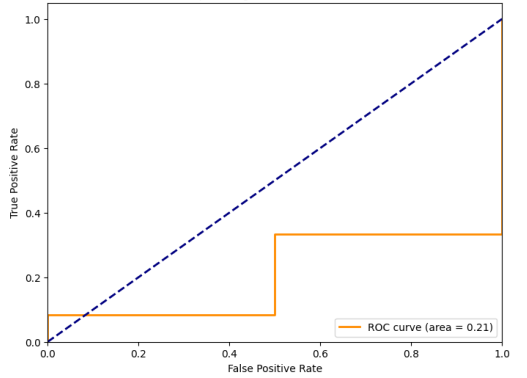
This study addresses the growing concern of technostress, a condition caused by the overwhelming use of digital technologies, exacerbated by the COVID-19 pandemic. The researchers developed a predictive model using machine learning algorithms, Random Forest (RF) and Support Vector Machine (SVM), to assess and manage technostress levels. The model considers factors such as age, gender, technology usage hours, and technological experiences to classify stress levels into high, moderate, and low categories. The study collected data through a questionnaire administered to knowledgeable respondents, using a non-probabilistic sampling approach. The results showed that both RF and SVM algorithms achieved high accuracy in classifying technostress, with SVM performing slightly better (94.5% vs 84.50%). The model’s effectiveness in predicting stress levels for users with varying degrees of stress is a significant contribution to the field. The research also developed an interactive user interface to facilitate user engagement with the model, promoting stress management and well-being in a technology-driven society. The study’s findings provide valuable insights into the challenges posed by technostress and offer a solution for mitigating its effects. The use of machine learning algorithms to classify gender based on the dataset demonstrates the model’s potential applications in various areas. Overall, this study demonstrates the importance of addressing technostress in the digital age and provides a valuable tool for managing stress levels. The development of predictive models like this one can help individuals and organizations mitigate the negative impacts of technostress, promoting a healthier and more sustainable relationship with technology.
Published
How to Cite
Issue
Section
Copyright (c) 2024 Gabriel James, Ime Umoren, Anietie Ekong, Saviour Inyang, Oscar Aloysius

This work is licensed under a Creative Commons Attribution 4.0 International License.
How to Cite
Similar Articles
- E. Omugbe, M. Abu-Shady, E. P. Inyang, Approximate bound state solutions of the fractional Schr\"{o}dinger equation under the spin-spin-dependent Cornell potential , Journal of the Nigerian Society of Physical Sciences: Volume 6, Issue 1, February 2024
- Godwin O. Olutona, Health Risk Assessment of Heavy Metals in Sediment of Tropical Freshwater Stream , Journal of the Nigerian Society of Physical Sciences: Volume 5, Issue 1, February 2023
- M. A. Lala, S. Kawu, O. A. Adesina, J. A. Sonibare, Assessment of Heavy Metal Pollution Status in Surface Soil of a Nigerian University , Journal of the Nigerian Society of Physical Sciences: Volume 4, Issue 3, August 2022
- Richard Olu Awonusika, Oluwaseun Akinlo Mogbojuri, Approximate Analytical Solution of Fractional Lane-Emden Equation by Mittag-Leffler Function Method , Journal of the Nigerian Society of Physical Sciences: Volume 4, Issue 2, May 2022
- Abiola T. Owolabi, Kayode Ayinde, Taiwo J. Adejumo, Wakeel A. Kasali, Emmanuel T. Adewuyi, Comparative Analysis of the Implication of Periods Before and During Vaccination of COVID-19 Infection in Some Regional Leading African Countries , Journal of the Nigerian Society of Physical Sciences: Volume 4, Issue 2, May 2022
- Benitho Ngwu, Godwin C. E. Mbah, Chika O. Mmaduakor, Sunday Isienyi, Oghenekevwe R. Ajewole, Felix D. Ajibade, Characterisation of Singular Domains in Threshold-Dependent Biological Networks , Journal of the Nigerian Society of Physical Sciences: Volume 4, Issue 3, August 2022
- K. T. Shivaram, A. M. Yogitha, S. M. Rajesh, N. Mahesh Kumar, Numerical computation of cut off wave number in polygonal wave guide by eight node finite element mesh generation approach , Journal of the Nigerian Society of Physical Sciences: Volume 6, Issue 4, November 2024
- Tunde Tajudeen Yusuf, Afeez Abidemi, Ayodeji Sunday Afolabi, Emmanuel Jesuyon Dansu, Optimal Control of the Coronavirus Pandemic with Impacts of Implemented Control Measures , Journal of the Nigerian Society of Physical Sciences: Volume 4, Issue 1, February 2022
- Victor Oboni Atabo, Solomon Ortwer Adee, A New Special 15-Step Block Method for Solving General Fourth Order Ordinary Differential Equations , Journal of the Nigerian Society of Physical Sciences: Volume 3, Issue 4, November 2021
- Bolarinwa Bolaji, B. I. Omede, U. B. Odionyenma, P. B. Ojih, Abdullahi A. Ibrahim, Modelling the transmission dynamics of Omicron variant of COVID-19 in densely populated city of Lagos in Nigeria , Journal of the Nigerian Society of Physical Sciences: Volume 5, Issue 2, May 2023
You may also start an advanced similarity search for this article.
Most read articles by the same author(s)
- Gabriel James, Anietie Ekong, Etimbuk Abraham, Enobong Oduobuk, Peace Okafor, Analysis of support vector machine and random forest models for predicting the scalability of a broadband network , Journal of the Nigerian Society of Physical Sciences: Volume 6, Issue 3, August 2024
- Gabriel James, Ifeoma Ohaeri, David Egete, John Odey, Samuel Oyong, Enefiok Etuk, Imeh Umoren, Ubong Etuk, Aloysius Akpanobong, Anietie Ekong, Saviour Inyang, Chikodili Orazulume, A fuzzy-optimized multi-level random forest (FOMRF) model for the classification of the impact of technostress , Journal of the Nigerian Society of Physical Sciences: Volume 7, Issue 3, August 2025