An adaptive neuro-fuzzy inference system for multinomial malware classification
Keywords:
Malware, Adaptive neuro-fuzzy inference system, Artificial intelligence, Fuzzy logic, Artificial neural networkAbstract
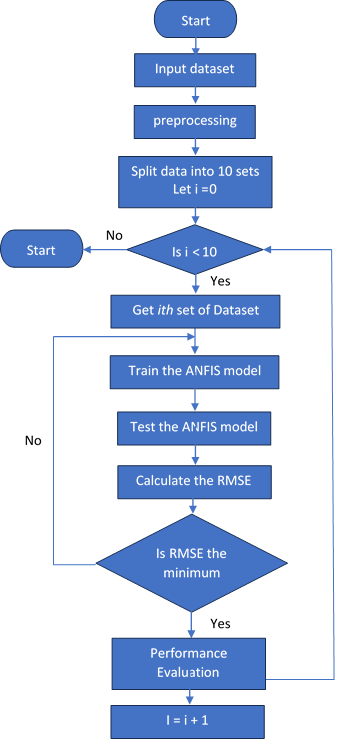
Malware detection and classification are important requirements for information security because malware poses a great threat to computer users. As the growth of technology increases, malware is getting more sophisticated and thereby more difficult to detect. Machine learning techniques have been extensively used for malware detection and classification. However, most of them are binomial classifications that only detect the presence of malware but do not classify them into types. This study sets out to develop a multinomial malware classifier using an adaptive neuro-fuzzy inference system (ANFIS) and investigate the effectiveness of ANFIS in the classification. A first-order Sugeno ANFIS model was developed. It has five layers and uses two if-then rules. The ANFIS model was trained and tested with two prominent malware datasets from the Canada Institute of Cyber Security. The experimental results showed that the performance of the ANFIS model degrades as the size of the datasets increases, and the accuracy, precision, recall, and root mean square error is 94%, 0.88, 0.87, and 0.19 respectively.
References
[1] N. A. Azeez, O.E. Odufuwa, S. Misra, J. Oluranti & R. Damasevi? cius,? “Windows PE Malware Detection Using Ensemble Learning”, Informatics 8 (2021) 10 https://doi.org/10.3390/informatics8010010.
[2] X. Gao, C. Hu, C. Shan, B. Liu, Z. Niu & H. Xie, “Malware classification for the cloud via semi-supervised transfer learning”, Journal of Information Security and Applications 55 (2020) 102661. https://doi.org/10.1016/j.jisa.2020.102661.
[3] H. Faruk, H. Shahriar, M. Valero, F. B. Lamia, S. Shahria, K. Abdullah, W. Michael, C. Alfredo, L. Dan, R. Akond & W. Fan, “Malware Detection and Prevention using Artificial Intelligence Techniques”, IEEE International Conference on Big Data, 2021, Orlando, FL, USA, 2021, pp. 5369–5377. https://doi.org/10.1109/BigData52589.2021.9671434.
[4] D. Gibert, C. Mate & J. Planes, “The rise of machine learning for detection and classification of malware: Research developments, trends and challenges”, Journal of Network and Computer Applications 153 (2020) 102526. https://doi.org/10.1016/j.jnca.2019.102526.
[5] R. Damasevi? cius,? A. Venckauskas,? J. Toldinas & S. Grigaliunas,“Ensemble-based classification using neural networks and¯ machine learning models for Windows PE malware detection”, Electronics 10 (2021) 1. https://doi.org/10.3390/electronics10040485.
[6] S. Banin & G. O. Dyrkolbotn, “Multinomial Malware Classification vis low-level features”, Digital Investigation 26 (2018) S107. https://doi.org/10.1016/j.diin.2018.04.019.
[7] B. Zhang & Y. C. Shin, “A data-driven approach of Takagi-Sugeno fuzzy control of unknown nonlinear systems”, Applied Sciences 11 (2021) 1. https://doi.org/10.3390/app11010062.
[8] N. Asrafi, Performance of malware classification on machine learning using feature selection, Master of Science Thesis, Computer Science, Kennesaw State Universit, Kennesaw, 2020. https://digitalcommons.kennesaw.edu/cgi/viewcontent.cgi?params=/context/cs_etd/article/1036/&path_info=Nusrat_Thesis_Final.pdf
[9] H. C. Tanuwidjaja & K. Kim, “Enhancing Malware Detection by Modified Deep Abstraction and Weighted Feature Selection”, Symposium on Cryptography and Information Security, Kochi, Japan, 2020, pp. 1–8. https://caislab.kaist.ac.kr/publication/paper_files/2020/scis2020_HR.pdf.
[10] A. S. Sodiya, O. J. Falana, S. A. Onashoga & B. S. Badmus, “Adaptive Neuro-Fuzzy System for Malware Detection”, Journal of Computer Science 21 2014 150044. https://ajol.info/index.php/jcsia/article/view/150044.
[11] U. Nugraha, “Malware Classification Using Machine Learning Algorithm”, Turkish Journal of Computer and Mathematics Education 12 (2021) 1834. https://turcomat.org/index.php/turkbilmat/article/view/3274.
[12] D. Rabadi & Sin G. Teo, “Advanced windows methods on malware detection and classification”, Computer Security Applications Conference, Austin, USA, 2020, pp. 54–68. https://doi.org/10.1145/3427228.3427242.
[13] B. Khammas, “Malware Detection using Sub-Signatures and Machine Learning Technique”, Journal of Information Security Research 9 (2018) 96. https://doi.org/10.6025/jisr/2018/9/3/96-106.
[14] T. Lu, Y. Du, L. Ouyang, Q. Chen & X. Wang,“Android malware detection based on a hybrid deep learning model”, Security and Communication Networks 2020 (2020) n/a. https://doi.org/10.1155/2020/8863617.
[15] M. Yousefi-Azar, L. G. C. Hamey, V. Varadharajan & S. Chen, “Malytics: A malware detection scheme”, IEEE Access, 6 (2018) 49418. https://doi.org/10.1109/ACCESS.2018.2864871.
[16] X. Liu, Q. Lei & K. Liu, “A Graph-Based Feature Generation Approach in Android”, Engineering, 2020 (2020) n/a. https://doi.org/10.1155/2020/3842094.
[17] I. Shhadat, B. Bataineh, A. Hayajneh & Z. A. Al-Sharif, “The Use of Machine Learning Techniques to Advance the Detection and Classification of Unknown Malware”, Procedia Computer Science, 170 (2019) 917. https://doi.org/10.1016/j.procs.2020.03.110.
[18] M. K. Alzaylaee, S. Y. Yerima & S. Sezer, “DL-Droid: Deep learning based android malware detection using real devices”, Computers and Security 89 (2020) 101663. https://doi.org/10.1016/j.cose.2019.101663.
[19] A. Aiterher, A. Almomani & S. Ramadase, “Application of Adaptive Neuro-Fuzzy Inference System for Information Security”, Journal of Computer Science 8 (2012) 983. https://thescipub.com/pdf/jcssp.2012.983.986.pdf.
[20] E. Eskandari & S. Hashemi, “A graph mining approach for detecting unknown malware”, Journal of Visual Language and Computing 23 (2012) 154. http://dx.doi.org/10.1016/j.jvlc.2012.02.002.
[21] Jamuna A & S.E Vinoth Ewards, “Survey of Traffic Classification using ML”, International Journal of Advanced Research in Computer Science 4 (2017) 65. https://www.ijarcs.info/index.php/Ijarcs/article/view/1598.
[22] P. Vinod, R. Jaipur, V. Laxmi & M. Gaur, “Survey on malware detection methods”, Proceedings of the 3rd Hackers’ Workshop on Computer and Internet Security, Kanpur, 2009, pp. 74–79. https://dl.acm.org/doi/10.1109/IRI51335.2021.00033.
[23] S. Yoo, S. Kim, S. Kim & B. B. Kang,“AI-HydRa: Advanced hybrid approach using random forest and deep learning for malware classification”, Information Sciences 546 (2021) 420. https://doi.org/10.1016/j.ins.2020.08.082.
[24] E. D. O. Andrade, J. Viterbo, C. N. Vasconcelos, J. Guerin & F. C.´ Bernardini, “A model based on LSTM neural networks to identify five different types of malware”, Procedia Computer Science 159 (2019) 182. https://doi.org/10.1016/j.procs.2019.09.173.
[25] M. Norouzi, A. Souri & M. Samad Zamini, ”A data mining classification approach for behavioral malware detection”, Journal of Computer Networks and Communications 2016 (2016) n/a. https://doi.org/10.1155/2016/8069672.
[26] L. Xiaofeng, Z. Xiao, J. Fangshuo, Y. Shengwei & S. Jing, “ASSCA: API based sequence and statistics features combined malware detection architecture”, Procedia Computer Science 129 (2018) 248. https://doi.org/10.1016/j.procs.2018.03.072.
[27] M. N. Al-Andoli, S. C. Tan, K. S. Sim, C. P. Lim & P. Y. Goh, “Parallel Deep Learning with a hybrid BP-PSO framework for feature extraction and malware classification”, Applied Soft Computing 131 (2022) 109756. https://doi.org/10.1016/j.asoc.2022.109756.
[28] J. M. Arif, M. F. Ab Razak, S. R. T. Mat, S. Awang, N. S. N. Ismail & A. Firdaus, “Android mobile malware detection using fuzzy AHP”, Journal of Information Security and Applications 61 102929. https://doi.org/10.1016/j.jisa.2021.102929.
[29] A. Djenna, A. Bouridane, S. Rubab, I. M. Marou, “Artificial IntelligenceBased Malware Detection, Analysis, and Mitigation”, Symmetry 15 (2023) 677. https://doi.org/10.3390/sym15030677.
[30] M. M. Masud, L. Khan & B. Thuraisingham, “A hybrid model to detect malicious executables”, IEEE International Conference on Communications”, Glasgow Scotland, 2007, pp. 1443–1448. https://ieeexplore.ieee.org/xpl/conhome/4288670/proceeding.
[31] S. Chavan, K. Shah, N. K. Dave, S. Mukherjee, A. Abraham & S. Sanyal, “Adaptive neuro-fuzzy intrusion detection systems”, International Conference on Information Technology: Coding and Computing, Las Vegas, Navada, 2004, pp. 70-74. http://dx.doi.org/10.1109/ITCC.2004.1286428.
[32] T. Mitiku & M. S. Manshahia, “Neuro Fuzzy Inference Approach : A Survey”, International Journal of Scientific Research in Science, Engineering and Technology 4 (2018) 505. https://ijsrset.com/home/issue/view/article.php?id=IJSRSET184831.
[33] Y. Fang, Y. Liu, C. Huang & L. Liu, “Fastembed: Predicting vulnerability exploitation possibility based on ensemble machine learning algorithm”, PLoS ONE 15 (2020) 1. https://doi.org/10.1371/journal.pone.0228439.
[34] S. G. Tzafestas, “Fuzzy Logic and Neural Network Handbook”, Journal of Intelligent & Robotic Systems 28 (2000) 293. http://dx.doi.org/10.1023/A:1008175521315.
[35] M. G. Schultz, E. Eskin & F. Zadok, “Data mining methods for detection of new malicious executables”, Proceedings of IEEE Symposium on Security and Privacy, Oakland, CA, USA, 2001, pp. 38–49. https://doi.org/10.1109/SECPRI.2001.924286.
Published
How to Cite
Issue
Section
Copyright (c) 2024 Amos Orenyi Bajeh, Mary Olayinka Olaoye, Fatima Enehezei Usman-Hamza, Ikeola Suhurat Olatinwo, Peter ogirima Sadiku, Abdulkadir Bolakale Sakariyah

This work is licensed under a Creative Commons Attribution 4.0 International License.