Modeling and stability analysis of a fractional-order tuberculosisvmodel with different exposed populations progressing to infection

Authors

  • Muhammad Farman
    Faculty of Arts and Sciences, Department of Mathematics, Near East University, Mersin 10, Nicosia 99138, Turkey;
    Faculty of Medicine, Department of Biostatistics and Medical Informatics, Karadeniz Technical University, Trabzon, Turkey;
    International Center for Interdisciplinary Research in Sciences, The University of Lahore, Lahore, Pakistan
  • Kottakkaran Sooppy Nisar
    Department of Mathematics, College of Science and Humanities in Al-Kharj, Prince Sattam Bin Abdulaziz University, Al-Kharj 11942, Saudi Arabia

Keywords:

Tuberculosis model, Well-posedness, Basic reproduction number, Lyapunov stability, Simulation

Abstract

This study develops a fractional-order mathematical model based on the Atangana--Baleanu--Caputo (ABC) operator to investigate the transmission dynamics of tuberculosis (TB). The framework incorporates memory and nonlocal effects to represent the spread and progression of TB within a population. The first derivative of a Lyapunov function is used to evaluate the infection locally and globally within the fractional-order model. The model satisfies the essential mathematical properties of positivity, boundedness, existence, and uniqueness of solutions, thereby establishing its biological and mathematical well-posedness. Fixed-point theory is used to analyze the model and bound its solution. The analysis establishes local and global stability conditions and identifies the parameters that most strongly affect disease transmission. An advanced numerical method is used to obtain approximate solutions of the fractional-order system and evaluate the effect of the fractional-order parameter. Numerical simulations show that decreasing the fractional-order parameter enhances memory effects and produces smoother convergence toward equilibrium states than the classical integer-order model. The results indicate that the fractional-order framework provides a useful representation of TB dynamics and may support the understanding and control of TB transmission.
Dimensions

[1] S. Tang & S. B. Squire, ``What lessons can be drawn from tuberculosis (TB) control in China in the 1990s? An analysis from a health system perspective'', Health Policy 72 (2005) 93. https://doi.org/10.1016/j.healthpol.2004.06.009.

[2] L. J. Podewils, N. Bantubani, C. Bristow, L. E. Bronner, A. Peters, A. Pym & L. D. Mametja, ``Completeness and reliability of the Republic of South Africa National Tuberculosis (TB) Surveillance System'', BMC Public Health 15 (2015) 765. https://doi.org/10.1186/s12889-015-2117-3.

[3] A. Faustini, A. J. Hall & C. A. Perucci, ``Risk factors for multidrug-resistant tuberculosis in Europe: a systematic review'', Thorax 61 (2006) 158. https://doi.org/10.1136/thx.2005.045963.

[4] S. Tang, L. Wang, H. Wang & D. P. Chin, ``Access to and affordability of healthcare for TB patients in China: issues and challenges'', Infectious Diseases of Poverty 5 (2016) 10. https://doi.org/10.1186/s40249-016-0096-y.

[5] J. R. Glynn, J. Bauer, A. S. de Boer, M. W. Borgdorff, P. E. M. Fine, P. Godfrey-Faussett & E. Vynnycky, ``Interpreting DNA fingerprint clusters of Mycobacterium tuberculosis. European Concerted Action on Molecular Epidemiology and Control of Tuberculosis'', International Journal of Tuberculosis and Lung Disease 3 (1999) 1055. Available online: https://pubmed.ncbi.nlm.nih.gov/10599007/.

[6] T. T. Tsai, C. Y. Huang, C. A. Chen, S. W. Shen, M. C. Wang, C. M. Cheng & C. F. Chen, ``Diagnosis of tuberculosis using colorimetric gold nanoparticles on a paper-based analytical device'', ACS Sensors 2 (2017) 1345. https://doi.org/10.1021/acssensors.7b00450.

[7] P. Narasimhan, J. Wood, C. R. MacIntyre & D. Mathai, ``Risk factors for tuberculosis'', Pulmonary Medicine 2013 (2013) 828939. https://doi.org/10.1155/2013/828939.

[8] K. L"{o}nnroth, G. Roglic & A. D. Harries, ``Improving tuberculosis prevention and care through addressing the global diabetes epidemic: from evidence to policy and practice'', The Lancet Diabetes & Endocrinology 2 (2014) 730. https://doi.org/10.1016/S2213-8587(14)70109-3.

[9] P. Nadol, K. W. Stinson, W. Coggin, M. Naicker, C. D. Wells, B. Miller & L. J. Nelson, ``Electronic tuberculosis surveillance systems: a tool for managing today's TB programs'', International Journal of Tuberculosis and Lung Disease 12 (2008) S8. Available online: https://pubmed.ncbi.nlm.nih.gov/18302816/.

[10] K. Floyd, ``Costs and effectiveness---the impact of economic studies on TB control'', Tuberculosis 83 (2003) 187. https://doi.org/10.1016/S1472-9792(02)00077-X.

[11] D. Garijo, S. Kinnings, L. Xie, L. Xie, Y. Zhang, P. E. Bourne & Y. Gil, ``Quantifying reproducibility in computational biology: the case of the tuberculosis drugome'', PLoS ONE 8 (2013) e80278. https://doi.org/10.1371/journal.pone.0080278.

[12] M. Farman, A. Hasan, M. U. Sultan, A. Ahmad, A. Akg"{u}l, F. Chaudhry, M. Zakarya, W. Albalawi & W. Weera, ``Yellow virus epidemiological analysis in red chili plants using Mittag--Leffler kernel'', Alexandria Engineering Journal 66 (2023) 811. https://doi.org/10.1016/j.aej.2022.10.064.

[13] A. Sajjad, M. Farman, A. Hasan & K. S. Nisar, ``Transmission dynamics of fractional-order yellow virus in red chili plants with the Caputo--Fabrizio operator'', Mathematics and Computers in Simulation 207 (2023) 347. https://doi.org/10.1016/j.matcom.2023.01.004.

[14] C. Xu, M. Farman, A. Hasan, A. Akg"{u}l, M. Zakarya, W. Albalawi & C. Park, ``Lyapunov stability and wave analysis of COVID-19 Omicron variant of real data with fractional operator'', Alexandria Engineering Journal 61 (2022) 11787. https://doi.org/10.1016/j.aej.2022.05.025.

[15] M. A. Khan & A. Atangana, ``Mathematical modeling and analysis of COVID-19: a study of new variant Omicron'', Physica A: Statistical Mechanics and its Applications 599 (2022) 127452. https://doi.org/10.1016/j.physa.2022.127452.

[16] M. Farman, M. U. Saleem, A. Ahmad & M. O. Ahmad, ``Analysis and numerical solution of SEIR epidemic model of measles with non-integer time fractional derivatives by using Laplace Adomian decomposition method'', Ain Shams Engineering Journal 9 (2018) 3391. https://doi.org/10.1016/j.asej.2017.11.010.

[17] M. Caputo & M. Fabrizio, ``A new definition of fractional derivative without singular kernel'', Progress in Fractional Differentiation and Applications 1 (2015) 73. https://doi.org/10.12785/pfda/010201.

[18] J. Losada & J. J. Nieto, ``Properties of a new fractional derivative without singular kernel'', Progress in Fractional Differentiation and Applications 1 (2015) 87. https://doi.org/10.12785/pfda/010202.

[19] S. Bhatter, S. Kumawat, S. D. Purohit & D. L. Suthar, ``Mathematical modeling of tuberculosis using Caputo fractional derivative: a comparative analysis with real data'', Scientific Reports 15 (2025) 12672. https://doi.org/10.1038/s41598-025-97502-5.

[20] B. C. Agbata, R. Dervishi, D. F. Agbebaku, E. Cenaj, O. C. Collins, A. U. Ezeafulukwe, M. M.-A. Shior & G. C. E. Mbah, ``A comprehensive analysis of fractional-order model of tuberculosis with treatment intervention'', BMC Infectious Diseases 25 (2025) 1070. https://doi.org/10.1186/s12879-025-11303-9.

[21] A. O. Sangotola, S. B. Adeyemo, O. A. Nuga, A. E. Adeniji & A. J. Adigun, ``A tuberculosis model with three infected classes'', Journal of the Nigerian Society of Physical Sciences 6 (2024) 1881. https://doi.org/10.46481/jnsps.2024.1881.

[22] O. F. Lawal & A. Abidemi, ``Modelling the effect of vaccination on the dynamics of tuberculosis in an age-structured population'', Proceedings of the Nigerian Society of Physical Sciences 2 (2025) 179. https://doi.org/10.61298/pnspsc.2025.2.179.

[23] J. F. G'{o}mez-Aguilar, ``New bilingualism model based on fractional operators with Mittag--Leffler kernel'', The Journal of Mathematical Sociology 41 (2017) 172. https://doi.org/10.1080/0022250X.2017.1356828.

[24] M. Ozair, T. Hussain, A. Aslam, R. Anees, M. Tanveer & J. F. G'{o}mez-Aguilar, ``Management of pine forests by assessment of insect pests and nematodes'', The European Physical Journal Plus 136 (2021) 916. https://doi.org/10.1140/epjp/s13360-021-01934-7.

[25] Z. Yang, M. Xiao, Z. Wang, Y. Sun, X. Yang, J. F. G'{o}mez-Aguilar & J. Cao, ``Higher-order interactions in the spatio-temporal dynamics of Leslie--Gower predator--prey systems'', Computational and Applied Mathematics 45 (2026) 344. https://doi.org/10.1007/s40314-026-03740-2.

[26] A. Atangana, ``Modelling the spread of COVID-19 with new fractal-fractional operators: can the lockdown save mankind before vaccination?'', Chaos, Solitons & Fractals 136 (2020) 109860. https://doi.org/10.1016/j.chaos.2020.109860.

[27] M. Farman, A. Akg"{u}l, S. F. Aldosary, K. S. Nisar & A. Ahmad, ``Fractional-order model for complex Layla and Majnun love story with chaotic behaviour'', Alexandria Engineering Journal 61 (2022) 6725. https://doi.org/10.1016/j.aej.2021.12.018.

[28] X. H. Zhang, A. Ali, M. A. Khan, M. Y. Alshahrani, T. Muhammad & S. Islam, ``Mathematical analysis of the TB model with treatment via Caputo-type fractional derivative'', Discrete Dynamics in Nature and Society 2021 (2021) 9512371. https://doi.org/10.1155/2021/9512371.

[29] M. Toufik & A. Atangana, ``New numerical approximation of fractional derivative with non-local and non-singular kernel: application to chaotic models'', The European Physical Journal Plus 132 (2017) 444. https://doi.org/10.1140/epjp/i2017-11717-0.

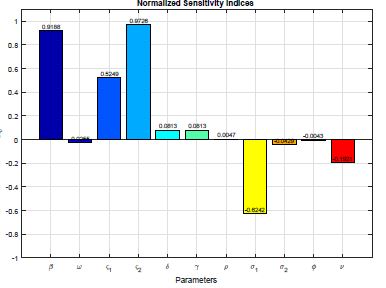
fig 1

Published

2026-08-10

How to Cite

Modeling and stability analysis of a fractional-order tuberculosisvmodel with different exposed populations progressing to infection. (2026). Journal of the Nigerian Society of Physical Sciences, 8(3), 3502. https://doi.org/10.46481/jnsps.2026.3502

Issue

Section

Mathematics & Statistics

How to Cite

Modeling and stability analysis of a fractional-order tuberculosisvmodel with different exposed populations progressing to infection. (2026). Journal of the Nigerian Society of Physical Sciences, 8(3), 3502. https://doi.org/10.46481/jnsps.2026.3502

Similar Articles

1-10 of 272

You may also start an advanced similarity search for this article.

Most read articles by the same author(s)