
Cattle rumen content, rice husk and cow horn biochars as amendments for enhanced remediation of petroleum-hydrocarbon-contaminated soil: physicochemical characterization and performance evaluation

Authors

  • Faustina Onyeyirichi Iniaghe
    Department of Industrial Chemistry, Federal University of Petroleum Resources Effurun, Effurun, Nigeria
    Department of Integrated Science, College of Education, Mosogar, Nigeria
  • Paschal Okiroro Iniaghe
    Department of Chemistry, Federal University Otuoke, Otuoke, Nigeria
  • Godswill Okeoghene Tesi
    Department of Industrial Chemistry, Federal University of Petroleum Resources Effurun, Effurun, Nigeria
  • Wisdom Ivwurie
    Department of Industrial Chemistry, Federal University of Petroleum Resources Effurun, Effurun, Nigeria

Keywords:

Biochar, Cattle rumen content, Total petroleum hydrocarbon, Soil remediation

Abstract

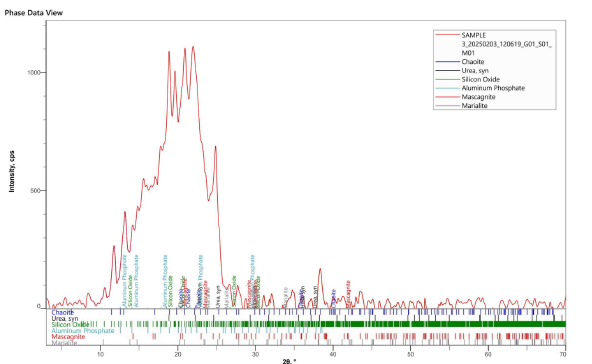
Petroleum hydrocarbon contamination of soil is a major environmental challenge in crude-oil-producing areas. Agricultural and abattoir wastes are promising low-cost soil amendments but remain greatly underutilized. In this study, cattle rumen content (CRC), rice husk biochar (RHB) and cow horn biochar (CHB) were converted into soil amendments and applied to petroleum-hydrocarbon-contaminated soils. Physicochemical characterization showed that CaO, SiO2 and SO3 were predominant in CRC, RHB and CHB, respectively. Quantitative phase X-ray diffraction gave 65 wt% and 56 wt% graphite in RHB and CHB, respectively, while a chaoite-like phase was tentatively observed in CRC at about 28 wt%. Brunauer--Emmett-Teller surface areas were 356.0, 254.9 and 185.9 m2 g-1 for CHB, RHB and CRC, respectively, with all materials exhibiting mesoporous structures (pore diameters 2.55-2.65 nm). RHB had a higher ash content (50%) than CHB (16%) and CRC (12%). When the amendments were applied to contaminated soil with an initial total petroleum hydrocarbon (TPH) concentration of 1307 mg kg-1 for 60 days, amendment type and application rate affected TPH reduction. RHB and CHB reduced TPH by 94% and 93%, respectively, at a 20% application rate, whereas CRC reduced TPH by 98% at a 10% application rate. Hydrocarbon-utilizing bacteria increased with time, with CRC producing the strongest stimulation. The study highlights the practical value of converting agricultural and abattoir wastes into effective soil remediation amendments for hydrocarbon-impacted areas.
Dimensions

[1] V. Tripathi, V. K. Gaur, I. Kaur, P. K. Srivastava & N. Manickam, ``Unlocking bioremediation potential for site restoration: A comprehensive approach for crude oil degradation in agricultural soil and phytotoxicity assessment'', Journal of Environmental Management 355 (2024) 120508. https://doi.org/10.1016/j.jenvman.2024.120508.

[2] Y. Lv, J. Bao, D. Liu, X. Gao, Y. Yu & L. Zhu, ``Synergistic effects of rice husk biochar and aerobic composting for heavy oil-contaminated soil remediation and microbial community succession evaluation'', Journal of Hazardous Materials 448 (2023) 130929. https://doi.org/10.1016/j.jhazmat.2023.130929.

[3] F. N. D. Mukome, M. C. Buelow, J. Shang, J. Peng, M. Rodriguez, D. M. Mackay, J. J. Pignatello, N. Sihota, T. P. Hoelen & S. J. Parikh, ``Biochar amendment as a remediation strategy for surface soils impacted by crude oil'', Environmental Pollution 265 (2020) 115006. https://doi.org/10.1016/j.envpol.2020.115006.

[4] Z. Wei, Y. Wei, Y. Liu, S. Niu, Y. Xu, J.-H. Park & J. J. Wang, ``Biochar-based materials as remediation strategy in petroleum hydrocarbon-contaminated soil and water: Performances, mechanisms, and environmental impact'', Journal of Environmental Sciences 138 (2024) 350. https://doi.org/10.1016/j.jes.2023.04.008.

[5] Agency for Toxic Substances and Disease Registry, ``Toxicological profile for total petroleum hydrocarbons (TPH)'', U.S. Department of Health and Human Services (2005). Available online: https://www.atsdr.cdc.gov/toxprofiles/tp123.pdf.

[6] B. Muijs & M. T. O. Jonker, ``A closer look at bioaccumulation of petroleum hydrocarbon mixtures in aquatic worms'', Environmental Toxicology and Chemistry 29 (2010) 1943. https://doi.org/10.1002/etc.263.

[7] U.S. Environmental Protection Agency, ``A citizen's guide to monitored natural attenuation (MNA)'', EPA 542-F-20-009 (2020). Available online: https://www.epa.gov/sites/default/files/2020-06/documents/mna_cg_fs_eng.pdf.

[8] P. Deebika, A. M. Sheela & R. Ilamathi, ``Biochar and compost-based phytoremediation of crude oil contaminated soil'', Indian Journal of Science and Technology 14 (2021). https://doi.org/10.17485/IJST/v14i3.1178.

[9] H. Lee, K. Sam, F. Coulon, S. De Gisi, M. Notarnicola & C. Labianca, ``Recent developments and prospects of sustainable remediation treatments for major contaminants in soil: A review'', Science of the Total Environment 912 (2024) 168769. https://doi.org/10.1016/j.scitotenv.2023.168769.

[10] T. Sayara & A. Sánchez, ``Bioremediation of PAH-contaminated soils: Process enhancement through composting/compost'', Applied Sciences 10 (2020) 3684. https://doi.org/10.3390/app10113684.

[11] B. Zhang, L. Zhang & X. Zhang, ``Biochar for soil remediation: Mechanisms and applications'', RSC Advances 9 (2019) 35246. https://doi.org/10.1039/C9RA06726D.

[12] Z. Liu, Y. Zhang, X. Li, Z. Sun, R. Zhang, X. Li & Y. Du, ``The application of biochar derived from rice husk enhanced the bioremediation of petroleum-contaminated soil in semi-arid areas'', Agronomy 14 (2024) 2015. https://doi.org/10.3390/agronomy14092015.

[13] U. Naeem & M. A. Qazi, ``Leading edges in bioremediation technologies for removal of petroleum hydrocarbons'', Environmental Science and Pollution Research 27 (2020) 27370. https://doi.org/10.1007/s11356-019-06124-8.

[14] Y. Lv, J. Bao, S. Li, D. Liu, D. Dai, M. Qv & L. Zhu, ``Biochar amendment of aerobic composting for the effective biodegradation of heavy oil and succession of bacterial community'', Bioresource Technology 362 (2022) 127820. https://doi.org/10.1016/j.biortech.2022.127820.

[15] Y. Li, J. Yang, Y. Song & M. Wei, ``Progress in biostimulation-based remediation of TPH-contaminated soils: A comprehensive review'', PeerJ 13 (2025) e19991. https://doi.org/10.7717/peerj.19991.

[16] H. Cheng, Y. Bian, F. Wang, X. Jiang, R. Ji, C. Gu, X. Yan & Y. Song, ``Green conversion of crop residues into porous carbons and their application to efficiently remove polycyclic aromatic hydrocarbons from water: Sorption kinetics, isotherms and mechanism'', Bioresource Technology 284 (2019) 1. https://doi.org/10.1016/j.biortech.2019.03.104.

[17] S. E. Hale, J. Lehmann, D. Rutherford, A. R. Zimmerman, R. T. Bachmann, V. Shitumbanuma, A. O'Toole, K. L. Sundqvist, H. P. H. Arp & G. Cornelissen, ``Quantifying the total and bioavailable polycyclic aromatic hydrocarbons and dioxins in biochars'', Environmental Science & Technology 46 (2012) 2830. https://doi.org/10.1021/es203984k.

[18] A. Tomczyk, Z. Sokolowska & A. Boguta, ``Biochar physicochemical properties: Pyrolysis temperature and feedstock kind effects'', Reviews in Environmental Science and Bio/Technology 19 (2020) 191. https://doi.org/10.1007/s11157-020-09523-3.

[19] Y. Chen, F. Wang, J. Gao, X. He, Q. Liu & L. Liu, ``Enhancing bioremediation of petroleum-contaminated soil by sophorolipids-modified biochar: Combined metagenomic and metabolomic analyses'', Science of the Total Environment 951 (2024) 175772. https://doi.org/10.1016/j.scitotenv.2024.175772.

[20] L. Kong, Y. Gao, Q. Zhou, X. Zhao & Z. Sun, ``Biochar accelerates PAHs biodegradation in petroleum-polluted soil by biostimulation strategy'', Journal of Hazardous Materials 343 (2018) 276. https://doi.org/10.1016/j.jhazmat.2017.09.040.

[21] J. Lehmann, M. C. Rillig, J. Thies, C. A. Masiello, W. C. Hockaday, D. Crowley & I. Kögel-Knabner, ``Biochar effects on soil biota--A review'', Soil Biology & Biochemistry 43 (2011) 1812. https://doi.org/10.1016/j.soilbio.2011.04.022.

[22] M. Ahmad, A. U. Rajapaksha, J. E. Lim, M. Zhang, N. Bolan, D. Mohan, M. Vithanage, S. S. Lee & Y. S. Ok, ``Biochar as a sorbent for contaminant management in soil and water: A review'', Chemosphere 99 (2014) 19. https://doi.org/10.1016/j.chemosphere.2013.10.071.

[23] A. E. Ajayi & R. Horn, ``Biochar-induced changes in soil resilience: Effects of soil texture and biochar dosage'', Pedosphere 27 (2017) 236. https://doi.org/10.1016/S1002-0160(17)60313-8.

[24] S. Žibutis, J. Pekarskas & L. Česonienė, ``Effect of horn shaving and horn core powder fertilizers on the dynamics of mineral nitrogen in the soil of organic farm'', Ekologija 58 (2012) 375. https://doi.org/10.6001/ekologija.v58i3.2534.

[25] I. E. Uwidia, F. I. Akhidenor & E. O. Oshodin, ``Comparative analysis of macro, micro and toxic elements in cow bones and horns'', Journal of Chemistry and Allied Sciences 1 (2025) 7. https://doi.org/10.60787/jcas.vol1no1.38.

[26] P. J. Weimer, ``Degradation of cellulose and hemicellulose by ruminal microorganisms'', Microorganisms 10 (2022) 2345. https://doi.org/10.3390/microorganisms10122345.

[27] T. K. Bhoi, I. Samal, A. Saraswat, H. C. Hombegowda, S. K. Samal, A. K. Dash, S. Sharma, P. Lawate, V. Vyas & M. B. Raza, ``Biochar as a soil amendment: Effects on microbial communities and soil health'', in Biochar Production for Green Economy, M. R. Reddy, S. R. Chavan & D. K. Mahajan (Eds.), Elsevier, Amsterdam (2024), p. 463. https://doi.org/10.1016/B978-0-443-15506-2.00022-5.

[28] M. Zhen, J. Tang, C. Li & H. Sun, ``Rhamnolipid-modified biochar-enhanced bioremediation of crude oil-contaminated soil and mediated regulation of greenhouse gas emission in soil'', Journal of Soil and Sediments 21 (2021) 123. https://doi.org/10.1007/s11368-020-02746-5.

[29] N. N. Kpakol, T. Osasere-Omoruyi, D. C. Belonwu & S. E. Okoro, ``Efficiency of cow-horn powder in the remediation of crude oil impacted soil'', Scientia Africana 23 (2024) 59. https://doi.org/10.4314/sa.v23i1.5.

[30] ASTM International, ``Standard test method for chemical analysis of wood charcoal'', ASTM D1762--84 (2013), ASTM International. https://doi.org/10.1520/D1762-84R13.

[31] O. Abollino, M. Aceto, M. Malandrino, E. Mentasti, C. Sarzanini & F. Petrella, ``Heavy metals in agricultural soils from Piedmont, Italy. Distribution, speciation and chemometric data treatment'', Chemosphere 49 (2002) 545. https://doi.org/10.1016/S0045-6535(02)00352-1.

[32] British Standards Institute, ``BS 1377-2: Methods of test for soils for civil engineering purposes. Classification tests'', BSI, London (1990). https://www.scribd.com/document/400142553/BS-1377-Part-2-Methods-Of-Test-For-Soils-For-Civil-En-80C-pdf.

[33] S. E. Agarry, K. M. Oghenejoboh & B. O. Solomon, ``Kinetic modelling and half-life study of adsorptive bioremediation of soil artificially contaminated with Bonny light crude oil'', Journal of Ecological Engineering 16 (2015) 1. https://doi.org/10.12911/22998993/2799.

[34] United States Environmental Protection Agency, ``Method 8015C: Nonhalogenated organics by gas chromatography'', SW-846 Test Methods, Washington, DC (2007). Available online: https://www.epa.gov/sites/default/files/2015-12/documents/8015c.pdf.

[35] P. O. Okerentugba, T. L. Ataikiru & T. Ichor, ``Isolation and characterisation of hydrocarbon utilizing yeast isolates from palm wine'', American Journal of Molecular Biology 6 (2016) 63. https://doi.org/10.4236/ajmb.2016.62007.

[36] L. Hu, Z. He & S. Zhang, ``Sustainable use of rice husk ash in cement-based materials: Environmental evaluation and performance improvement'', Journal of Cleaner Production 264 (2020) 121744. https://doi.org/10.1016/j.jclepro.2020.121744.

[37] Z. Zhao, T. Nie & W. Zhou, ``Enhanced biochar stabilities and adsorption properties for tetracycline by synthesizing silica-composited biochar'', Environmental Pollution 254 (2019) 113015. https://doi.org/10.1016/j.envpol.2019.113015.

[38] J. T. N. Knijnenburg, S. Suwanree, D. Macquarrie, P. Kasemsiri & K. Jetsrisuparb, ``Phosphorus recovery from animal manures through pyrolysis: Phosphorus transformations, release mechanisms, and applications of manure biochars in agriculture'', RSC Sustainability 3 (2025) 1084. https://doi.org/10.1039/D4SU00524D.

[39] S. Banasaz & V. Ferraro, ``Keratin from animal by-products: Structure, characterization, extraction and application--A review'', Polymers 16 (2024) 1999. https://doi.org/10.3390/polym16141999.

[40] X. Zhang, Y. Zhang, S. Zhang, L. Yao & Y. Hao, ``Lignocellulosic biomass pyrolysis: A review on the pretreatment and catalysts'', Fuel Processing Technology 279 (2025) 108352. https://doi.org/10.1016/j.fuproc.2025.108352.

[41] K. B. Ansari, J. S. Arora, J. W. Chew, P. J. Dauenhauer & S. H. Mushrif, ``Fast pyrolysis of cellulose, hemicellulose, and lignin: Effect of operating temperature on bio-oil yield and composition and insights into the intrinsic pyrolysis chemistry'', Industrial & Engineering Chemistry Research 58 (2019) 15838. https://doi.org/10.1021/acs.iecr.9b00920.

[42] S. K. Simakov, A. E. Kalmykov, L. M. Sorokin, M. P. Novikov, I. A. Drozdova, M. A. Yagovkina & E. A. Grebenshchikova, ``Chaoite formation from carbon-bearing fluid at low pressure--temperature parameters'', Doklady Earth Sciences 399 (2004) 1289. https://www.researchgate.net/publication/281560196_Chaoite_formation_from_carbon-bearing_fluid_at_low_PT_parameters.

[43] B. Hidayat, A. Rauf, T. Sabrina & A. Jamil, ``Potential of several biomass as biochar for heavy metal adsorbent'', Journal of Asian Scientific Research 8 (2018) 293. https://doi.org/10.18488/journal.2.2018.811.293.300.

[44] M. Zahed, S. Salehi, R. Madadi & F. Hajebi, ``Biochar as a sustainable product for remediation of petroleum contaminated soil'', Current Research in Green and Sustainable Chemistry 4 (2021) 100055. https://doi.org/10.1016/j.crgsc.2021.100055.

[45] M. Thommes, K. Kaneko, A. V. Neimark, J. P. Olivier, F. Rodriguez-Reinoso, J. Rouquerol & K. S. W. Sing, ``Physisorption of gases, with special reference to the evaluation of surface area and pore size distribution (IUPAC Technical Report)'', Pure and Applied Chemistry 87 (2015) 1051. https://doi.org/10.1515/pac-2014-1117.

[46] M. Theeba, R. T. Bachmann, Z. I. Ilani, M. Zulkefli, M. H. A. Husni & A. W. Samsuri, ``Characterization of local mill rice husk charcoal and its effect on compost properties'', Malaysian Journal of Soil Science 16 (2012) 89. https://www.researchgate.net/publication/289318861_Characterization_of_local_mill_rice_husk_charcoal_and_its_effect_on_compost_properties

[47] A. Ndekei, M. Gitita, N. Njomo & D. Mbui, ``Synthesis and characterization of rice husk biochar and its application in the adsorption studies of lead and copper'', International Research Journal of Pure and Applied Chemistry 22 (2021) 36. https://doi.org/10.9734/irjpac/2021/v22i430402.

[48] F. F. Severo, L. S. da Silva, J. S. C. Moscôso, Q. Sarfaraz, L. F. R. Júnior, A. F. Lopes, L. B. Marzari & G. D. Molin, ``Chemical and physical characterization of rice husk biochar and ashes and their iron adsorption capacity'', SN Applied Sciences 2 (2020) 1286. https://doi.org/10.1007/s42452-020-3088-2.

[49] B. Chen, D. Zhou & L. Zhu, ``Transitional adsorption and partition of nonpolar and polar aromatic contaminants by biochars of pine needles with different pyrolytic temperatures'', Environmental Science & Technology 42 (2008) 5137. https://doi.org/10.1021/es8002684.

[50] D. J. Tomlinson, C. H. Mülling & T. M. Fakler, ``Formation of keratins in the bovine claw: Roles of hormones, minerals, and vitamins in functional claw integrity'', Journal of Dairy Science 87 (2004) 797. https://doi.org/10.3168/jds.S0022-0302(04)73223-3.

[51] R. M. Silverstein, F. X. Webster, D. J. Kiemle & D. L. Bryce, Spectrometric Identification of Organic Compounds, 8th ed., John Wiley & Sons, Hoboken, NJ 2014.https://www.wiley.com/en-ae/Spectrometric+Identification+of+Organic+Compounds%2C+8th+Edition-p-9780470616376

[52] X. Shu, J. He, Z. Zhou, L. Xia, Y. Hu, Y. Zhang, Y. Zhang, Y. Luo, H. Chu, W. Liu, S. Yuan, X. Gao & C. Wang, ``Organic amendments enhance soil microbial diversity, microbial functionality and crop yields: A meta-analysis'', Science of the Total Environment 829 (2022) 154627. https://doi.org/10.1016/j.scitotenv.2022.154627.

[53] M. Alexander, Biodegradation and Bioremediation, 2nd ed., Academic Press, San Diego, CA (1973). ISBN: 978-0-12-049861-1.

[54] M. T. B. Abena, T. Li, M. N. Shah & W. Zhong, ``Biodegradation of total petroleum hydrocarbons (TPH) in highly contaminated soils by natural attenuation and bioaugmentation'', Chemosphere 234 (2019) 864. https://doi.org/10.1016/j.chemosphere.2019.06.111.

[55] G. L. Northcott & K. C. Jones, ``Partitioning, extractability, and formation of nonextractable polycyclic aromatic hydrocarbon residues in soil: 1. Compound differences in aging and sequestration'', Environmental Science & Technology 35 (2001) 1103. https://doi.org/10.1021/es000071y.

[56] P. B. Hatzinger & M. Alexander, ``Effect of aging of chemicals in soil on the biodegradability and extractability'', Environmental Science & Technology 29 (1995) 537. https://doi.org/10.1021/es00002a033.

[57] U. C. Brinch, F. Ekelund & C. S. Jacobsen, ``Method for spiking soil samples with organic compounds'', Applied and Environmental Microbiology 68 (2002) 1808. https://doi.org/10.1128/AEM.68.4.1808-1816.2002.

[58] N. Ni, F. Wang, Y. Song, Y. Bian, R. Shi, X. Yang, C. Gu & X. Jiang, ``Mechanisms of biochar reducing the bioaccumulation of polycyclic aromatic hydrocarbons in rice from soil: Degradation stimulation versus immobilization'', Chemosphere 196 (2018) 288. https://doi.org/10.1016/j.chemosphere.2017.12.192.

[59] T. Han, Z. Zhao, M. Bartlam & Y. Wang, ``Combination of biochar amendment and phytoremediation for hydrocarbon removal in petroleum-contaminated soil'', Environmental Science and Pollution Research 23 (2016) 21219. https://doi.org/10.1007/s11356-016-7236-6.

[60] A. M. Elshafei & R. Mansour, ``Microbial bioremediation of soils contaminated with petroleum hydrocarbons'', Discover Soil 1 (2024) 9. https://doi.org/10.1007/s44378-024-00004-5.

[61] C. H. Chaîneau, G. Rougeux, C. Yepremian & J. Oudot, ``Effects of nutrient concentration on the biodegradation of crude oil and associated microbial populations in soil'', Soil Biology & Biochemistry 37 (2005) 1490. https://doi.org/10.1016/j.soilbio.2005.01.012.

[62] B. A. Mekonnen, T. A. Aragaw & M. B. Genet, ``Bioremediation of petroleum hydrocarbon contaminated soil: A review on principles, degradation mechanisms, and advancements'', Frontiers in Environmental Science 12 (2024) 1354422. https://doi.org/10.3389/fenvs.2024.1354422.

[63] Y. Luo, M. Durenkamp, M. De Nobili, Q. Lin & P. C. Brookes, ``Short-term soil priming effects and the mineralization of biochar following its incorporation to soils of different pH'', Soil Biology & Biochemistry 43 (2011) 2304. https://doi.org/10.1016/j.soilbio.2011.07.020.

[64] D. V. Zige, F. I. Omeje & C. K. Anumudu, ``Assessment of heterotrophic bacterial count (HBC) associated with commercial freezers in Yenagoa metropolis'', American Journal of Microbiological Research 7 (2019) 98. https://www.researchgate.net/publication/338778797_Assessment_of_Heterotrophic_Bacterial_Count_HPC_Associated_with_Commercial_Freezers_in_Yenagoa_Metropolis.

[65] O. F. Osisami, E. C. Egwim, S. E. Adeboye, D. A. Adesina, J. S. Abdul-Hadi, Y. O. Falana & A. E. Oketa, ``Effect of biochar from plantain trunk wastes' remediation on microbial community dynamics of crude oil contaminated soil'', Ilorin Journal of Science 11 (2024) 146. https://doi.org/10.54908/iljs.fapscon.2024.11.03.1019.

[66] Z. Cai, Q. Zhou, S. Peng & K. Li, ``Promoted biodegradation and microbiological effects of petroleum hydrocarbons by Impatiens balsamina L. with strong endurance'', Journal of Hazardous Materials 183 (2010) 731. https://doi.org/10.1016/j.jhazmat.2010.07.087.

XRD of cattle rumen content showing identified phases.

Published

2026-05-15

How to Cite

Cattle rumen content, rice husk and cow horn biochars as amendments for enhanced remediation of petroleum-hydrocarbon-contaminated soil: physicochemical characterization and performance evaluation. (2026). Journal of the Nigerian Society of Physical Sciences, 8(2), 3388. https://doi.org/10.46481/jnsps.2026.3388

How to Cite

Cattle rumen content, rice husk and cow horn biochars as amendments for enhanced remediation of petroleum-hydrocarbon-contaminated soil: physicochemical characterization and performance evaluation. (2026). Journal of the Nigerian Society of Physical Sciences, 8(2), 3388. https://doi.org/10.46481/jnsps.2026.3388

Similar Articles

11-20 of 79

You may also start an advanced similarity search for this article.



