Implicit Four-Point Hybrid Block Integrator for the Simulations of Stiff Models
Keywords:
Hybrid block integrator, Imolicit, Lagrange polynomial, Simulation, Stiff modelAbstract
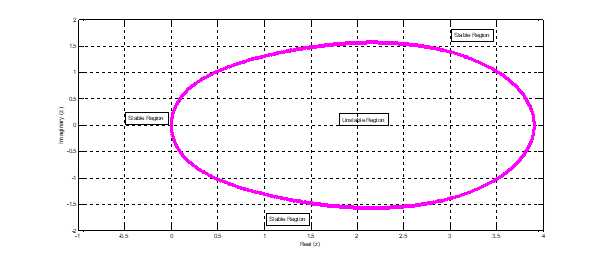
Over the years, the systematic search for stiff model solvers that are near-optimal has attracted the attention of many researchers. An attempt has been made in this research to formulate an implicit Four-Point Hybrid Block Integrator (FPHBI) for the simulations of some renowned rigid stiff models. The integrator is formulated by using the Lagrange polynomial as basis function. The properties of the integrator which include order, consistency, and convergence were analyzed. Further analysis showed that the proposed integrator has an A-stability region. The A-stability nature of the integrator makes it more robust and fitted for the simulation of stiff models. To test the computational reliability of the new integrator, few well-known technical stiff models such as the pharmacokinetics, Robertson and Van der Pol models were solved. The results generated were then compared with those of some existing methods including the MATLAB solid solvent, ode 15s. From the results generated, the new implicit FPHBI performed better than the ones with which we compared our results with.
Published
How to Cite
Issue
Section
Copyright (c) 2022 Journal of the Nigerian Society of Physical Sciences

This work is licensed under a Creative Commons Attribution 4.0 International License.
How to Cite
Similar Articles
- Emmanuel Adeyefa, O. S. Esan, Exponentially Fitted Chebyshev Based Algorithm as Second Order Initial Value Solver , Journal of the Nigerian Society of Physical Sciences: Volume 2, Issue 1, February 2020
- Kazeem adebowale Dawodu, Extension of ADMMAlgorithmin Solving Optimal Control Model Governed by Partial Differential Equation , Journal of the Nigerian Society of Physical Sciences: Volume 3, Issue 2, May 2021
- Samson Olaniyi, Furaha M. Chuma, Sulaimon F. Abimbade, Asymptotic stability analysis of a fractional epidemic model for Ebola virus disease in Caputo sense , Journal of the Nigerian Society of Physical Sciences: Volume 7, Issue 1, February 2025
- B. Laxmi, K. Chand, P. Thakur, Hydrodynamic Casson hybrid nanofluid flow across a stretching sheet in the regime of velocity slip and temperature jump,including viscous dissipation, melting, Soret and Dufour effects , Journal of the Nigerian Society of Physical Sciences: Volume 7, Issue 4, November 2025
- A. O. Sangotola, S. B. Adeyemo, O. A. Nuga, A. E. Adeniji, A. J. Adigun, A tuberculosis model with three infected classes , Journal of the Nigerian Society of Physical Sciences: Volume 6, Issue 1, February 2024
- Yakubu Aliyu, Umar Usman, On Bivariate Nadarajah-Haghighi Distribution derived from Farlie-Gumbel-Morgenstern copula in the Presence of Covariates , Journal of the Nigerian Society of Physical Sciences: Volume 5, Issue 2, May 2023
- Emmanuel Chidiebere Duru, Godwin Christopher Ezike Mbah, Michael Chimezie Anyanwu, Nnamani Nicholas Topman, Modelling the co-infection of malaria and zika virus disease , Journal of the Nigerian Society of Physical Sciences: Volume 6, Issue 2, May 2024
- Idris Babaji Muhammad, Salisu Usaini, Dynamics of Toxoplasmosis Disease in Cats population with vaccination , Journal of the Nigerian Society of Physical Sciences: Volume 3, Issue 1, February 2021
- Tunde Tajudeen Yusuf, Afeez Abidemi, Ayodeji Sunday Afolabi, Emmanuel Jesuyon Dansu, Optimal Control of the Coronavirus Pandemic with Impacts of Implemented Control Measures , Journal of the Nigerian Society of Physical Sciences: Volume 4, Issue 1, February 2022
- Adefunke Bosede Familua, Ezekiel Olaoluwa Omole, Luke Azeta Ukpebor, A Higher-order Block Method for Numerical Approximation of Third-order Boundary Value Problems in ODEs , Journal of the Nigerian Society of Physical Sciences: Volume 4, Issue 3, August 2022
You may also start an advanced similarity search for this article.