Implicit Four-Point Hybrid Block Integrator for the Simulations of Stiff Models
Keywords:
Hybrid block integrator, Imolicit, Lagrange polynomial, Simulation, Stiff modelAbstract
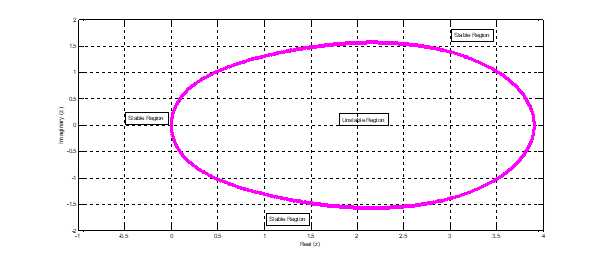
Over the years, the systematic search for stiff model solvers that are near-optimal has attracted the attention of many researchers. An attempt has been made in this research to formulate an implicit Four-Point Hybrid Block Integrator (FPHBI) for the simulations of some renowned rigid stiff models. The integrator is formulated by using the Lagrange polynomial as basis function. The properties of the integrator which include order, consistency, and convergence were analyzed. Further analysis showed that the proposed integrator has an A-stability region. The A-stability nature of the integrator makes it more robust and fitted for the simulation of stiff models. To test the computational reliability of the new integrator, few well-known technical stiff models such as the pharmacokinetics, Robertson and Van der Pol models were solved. The results generated were then compared with those of some existing methods including the MATLAB solid solvent, ode 15s. From the results generated, the new implicit FPHBI performed better than the ones with which we compared our results with.
Published
Issue
Section
Copyright (c) 2022 Journal of the Nigerian Society of Physical Sciences

This work is licensed under a Creative Commons Attribution 4.0 International License.
Similar Articles
- Suha Ibrahim Salih Al-Ali, Zaidun Naji Abudi, Mohammed Nsaif Abbas, Modelling and Simulation for the use of Natural Waste to Purified Contaminated Heavy Metals , Journal of the Nigerian Society of Physical Sciences: Volume 5, Issue 1, February 2023
- J. O. Kuboye, O. F. Quadri, O. R. Elusakin, Solving third order ordinary differential equations directly using hybrid numerical models , Journal of the Nigerian Society of Physical Sciences: Volume 2, Issue 2, May 2020
- Osowomuabe Njama-Abang, Denis U. Ashishie, Paul T. Bukie, Addressing class imbalance in lassa fever epidemic data, using machine learning: a case study with SMOTE and random forest , Journal of the Nigerian Society of Physical Sciences: Volume 7, Issue 3, August 2025
- Nahid Salma, Majid Khan Majahar Ali, Raja Aqib Shamim, Machine learning-based feature selection for ultra-high-dimensional survival data: a computational approach , Journal of the Nigerian Society of Physical Sciences: Volume 7, Issue 3, August 2025
- Uthumporn Panitanarak, Aliyu Ismail Ishaq, Alfred Adewole Abiodun, Hanita Daud, Ahmad Abubakar Suleiman, A new Maxwell-Log logistic distribution and its applications for mortality rate data , Journal of the Nigerian Society of Physical Sciences: Volume 7, Issue 2, May 2025
- Ebere Uzoka Chidi, Edward Anoliefo, Collins Udanor, Asogwa Tochukwu Chijindu, Lois Onyejere Nwobodo, A blind navigation guide model for obstacle avoidance using distance vision estimation based YOLO-V8n , Journal of the Nigerian Society of Physical Sciences: Volume 7, Issue 1, February 2025
- W. A. Yahya, Alpha decay half-lives of 171-189Hg isotopes using Modified Gamow-like model and temperature dependent proximity potential , Journal of the Nigerian Society of Physical Sciences: Volume 2, Issue 4, November 2020
- F. U. Salifu, O. A. Oladipo, E. O. Ebock, B. Nava, Deep neural network model for vertical total electron content prediction at a single low latitude station , Journal of the Nigerian Society of Physical Sciences: Volume 7, Issue 4, November 2025
- U. S. Aliyu, I. G. Geidam, M. S. Otto, M. Hussaini, Investigations of the Elastic Moduli of Er2O3 NPs Doped TeO2 – B2O3 – SiO2 Glasses using Theoretical Models , Journal of the Nigerian Society of Physical Sciences: Volume 4, Issue 1, February 2022
- Samy A. Khalil, Performance Evaluation and Statistical Analysis of Solar Energy Modeling: A Review and Case Study , Journal of the Nigerian Society of Physical Sciences: Volume 4, Issue 4, November 2022
You may also start an advanced similarity search for this article.