Analysis of support vector machine and random forest models for predicting the scalability of a broadband network
Keywords:
Broadband Networks, Machine Learning, Network performance metrics, Random forest, Support vector machineAbstract
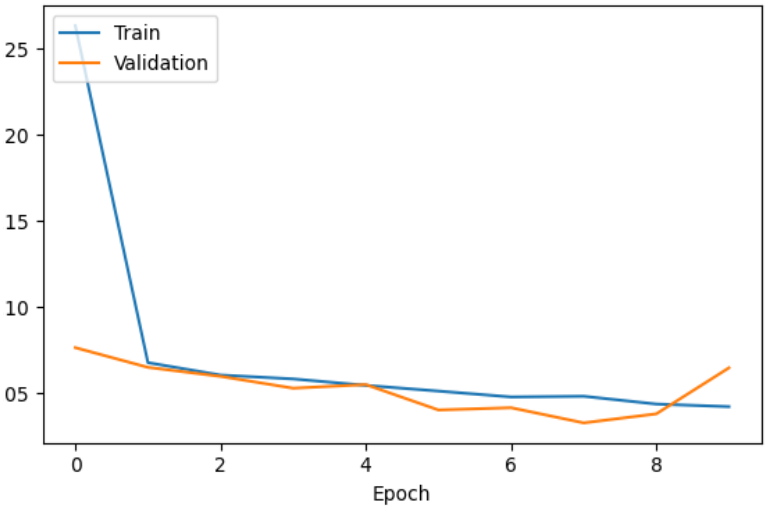
This study proposed a machine learning approach to predict the scalability of broadband networks, which is crucial for ensuring fast and reliable internet connectivity. Scalability measures a network’s ability to handle increasing users, devices, and data traffic without compromising performance. The researchers leveraged the strengths of Random Forest (RF) and Support Vector Machine (SVM) algorithms to predict scalability. A large dataset of 40,000 data points was collected, focusing on six key metrics: Response Time, Bandwidth, Latency, Error Rate, Throughput, and Number of Users Connected. The data was preprocessed and divided into training and testing sets (80:20 ratio). Both RF and SVM algorithms were trained on the dataset, and a comparative analysis was conducted to determine which algorithm performed better. The results showed that the RF model outperformed the SVM model, achieving an accuracy of 95.0% compared to 91.0%. The RF model also exhibited higher precision, recall, and AUC scores. Feature importance analysis revealed that Response Time and Throughput were the most significant factors in determining network scalability. The study demonstrated the effectiveness of the RF model in predicting broadband network scalability, with a lower loss value (0.0133 for training and 0.0160 for validation) compared to the SVM model. This approach will help network operators and administrators predict and improve network scalability, ensuring reliable and fast internet connectivity. The study contributes to the development of machine learning-based solutions for broadband network performance evaluation and optimization.
References
L. Ruan, M. P. I. Dias & E. Wong, “Machine learning-based bandwidth prediction for low-latency h2m applications,” IEEE Internet Things J. 6 (2019) 3743. https://doi.org/10.1109/JIOT.2018.2890563.
L. Huang, X. Dong & T. Edward, “A scalable deep learning platform for identifying geological features from seismic attributes”, The Leading Edge 36 (2017) 249. https://doi.org/10.1190/tle36030249.1.
I. Umoren, S. Inyang & A. Ekong, “A fuzzy knowledge-based system for modeling handoff prediction in mobile communication networks”, Journal of mobile communication 15 (2021) 1. https://www.google.com/url?sa=t&source=web&rct=j&opi=89978449&url=https://docsdrive.com/%3Fpdf%3Dmedwelljournals/jmcomm/2021/1-19.pdf.
R. M. Morais & J. Pedro, “Machine learning models for estimating quality of transmission in DWDM networks”, J. Opt. Commun. Netw 10 (2018) 84. https://doi.org/10.1364/JOCN.10.000D84.
C. I. Ituma, S. O. Iwok & G. G. James, “Implementation of an optimized packet switching parameters in wireless communication networks”, Int. J. Sci. Eng. Res. 11 (2020) 350. https://www.ijser.org/researchpaper/IMPLEMENTATION-OF-AN-OPTIMIZED-PACKET-SWITCHING-PARAMETERS-IN-WIRELESS-COMMUNICATION-NETWORKS.pdf.
C. Ituma, S. O. Iwok and G. G. James, “A model of intelligent packet switching in wireles communication networks,” Int. J. Sci. Eng. Res. 11 (2020) 2341. http://www.ijser.org.
Y. Wang & M. Kosinski, “Deep neural networks can detect sexual orientation from faces”, Graduate School of Business, Stanford University, Stanford, CA94305, USA, 2020. https://osf.io/zn79k/.
G. G. James, P. C. Okafor, E. G. Chukwu, N. A. Michael & O. A. Ebong, “Predictions of criminal tendency through facial expression using convolutional neural network”, J. Inf. Syst. Inform. 6 (2024) 635. https://journal-isi.org/index.php/isi/article/view/635.
I. J. Goodfellow et al., “Challenges in representation learning: a report on three machine learning contests”. arXiv, 2013. [online]. http://arxiv.org/abs/1307.0414.
G. G. James, W. F. Ekpo, E. G. Chukwu, N. A. Michael, O. A. Ebong & P. C. Okafor, “Optimizing business intelligence system using big data and machine learning”, J. Inf. Syst. Inform. 6 (2024) 1. http://journal-isi.org/index.php/isi.
H. Jha & V. Vijayarajan, “Mobile internet throughput prediction using machine learning techniques”, in 2020 International Conference on Smart Electronics and Communication (ICOSEC), Trichy, India 8 (2020) 253. https://doi.org/10.1109/ICOSEC49089.2020.9215436.
B. S. Sahay and J. Ranjan, “Real-time business intelligence in supply chain analytics”, Inf. Manag. Comput. Secure. 16 (2008) 28. https://doi.org/10.1108/09685220810862733.
T. Subramanya, D. Harutyunyan & R. Riggio, “Machine learning-driven service function chain placement and scaling in MEC-enabled 5G networks”, Comput. Netw. 166 (2020) 106980. https://doi.org/10.1016/j.comnet.2019.106980.
A. Ekong, I. Attih, G. James & U. Edet, “Effective classification of diabetes mellitus using support vector machine algorithm”, Res. J. Sci. Technol. 4 (2024) 18. https://rejost.com.ng/index.php/home.
N. Kundariya et al., “A review on integrated approaches for municipal solid waste for environmental and economical relevance: Monitoring tools, technologies, and strategic innovations”, Bioresour. Technol. 342 (2021) 25982. https://doi.org/10.1016/j.biortech.2021.125982.
N. G. Resmi, A. Shajan, J. Jose, J. P. George & M. Harikrishnan, “Solid waste tracking and route optimization using geotagging and k-means clustering”, Int. J. Appl. Eng. Res. 16 (2021) 633. https://www.google.com/url?sa=t&source=web&rct=j&opi=89978449&url=https://www.ripublication.com/ijaer21/ijaerv16n8_01.pdf.
J. Wang, X. Wu & C. Zhang, “Support vector machines based on K-means clustering for real-time business intelligence systems”, Int. J. Bus. Intell 1 (2005) 54. https://doi.org/10.1504/IJBIDM.2005.007318.
S. Biswas & J. Sen, “A proposed architecture for big data driven supply chain analytics”, Innovation Practice eJournal 14 (2016) 23414. https://doi.org/10.2139/ssrn.2795884.
E. Eyceyurt, Y. Egi & J. Zec, “Machine-learning-based uplink throughput prediction from physical layer measurements”, Electronics, 11 (2022) 1227. https://doi.org/10.3390/electronics11081227.
Y. Nkansah-Gyekye, An intelligent vertical handoff decision algorithm in next-generation wireless networks, Ph.D. dissertation, Department of Computer Science, University of the Western Cape, South Africa, 2010. https://core.ac.uk/download/pdf/58913821.pdf.
T. A. Olukan, Y.C. Chiou, C. H. Chiu, C.Y. Lai, S. Santos & M. Chiesa, “Predicting the suitability of lateritic soil type for low-cost sustainable housing with image recognition and machine learning techniques”, J. Build. Eng. 29 (2020) 101175. https://doi.org/10.1016/j.jobe.2020.101175.
W. A. Awad & S. M. Elseuofi, “Machine learning methods for e-mail classification”, Int. J. Comput. Appl. 16 (2011) 39. https://doi.org/10.5120/1974-2646.
T. S. Guzella & W. M. Caminhas, “A review of machine learning approaches to spam filtering”, Expert Syst. Appl. 36 (2009) 10206. doi: https://doi.org/10.1016/j.eswa.2009.02.037.
O. A. S. Carpinteiro, I. Lima, J. M. C. Assis, A. C. Z. De Souza, E. M. Moreira & C. A. M. Pinheiro, “A neural model in anti-spam systems”, in artificial neural networks – ICANN 4132 (2006) 847. https://doi.org/10.1007/11840930_88.
H. Zhang, A. C. Berg, M. Maire & J. Malik, “SVM-KNN: Discriminative nearest neighbor classification for visual category recognition”, in 2006 IEEE Computer Society Conference on Computer Vision and Pattern Recognition 2 (2006) 2126. https://doi.org/10.1109/CVPR.2006.301.
A. Ekong, B. Ekong & A. Eden. Supervised machine learning model for effective classification of patients with COVID-19 symptoms based on Bayesian belief network”, Researchers Journal of Science and Technology 2 (2022) 27. https://www.rejost.com.ng/index.php/home/article/view/14.
G. G. James, E. G. Chukwu & P. O. Ekwe, “Design of an intelligent based system for the diagnosis of lung cancer”, Int. J. Innov. Sci. Res. Technol. 8 (2023) 791. https://www.ijisrt.com/volume-8-2023_issue-6-june.
G. G. James, A. E. Okpako, C. Ituma, & J. E. Asuquo, “Development of hybrid intelligent based information retreival technique”, Int. J. Comput. Appl. 184 (2022) 13. https://doi.org/10.5120/ijca2022922401.
C. Ituma, G. G. James & F. U. Onu, “A neuro-fuzzy based document tracking & classification system”, Int. J. Eng. Appl. Sci. Technol. 4 (2020) 414. https://doi.org/10.33564/IJEAST.2020.v04-i10.075.
G. G. James, U. A. Umoh, U. G. Inyang & O. M. Ben, “File allocation in a distributed processing environment using gabriel’s allocation models”, Int. J. Eng. Tech. Math 5 (2012) 56. https://www.researchgate.net/publication/378372640_File_Allocation_in_a_Distributed_Processing_Environment_Using_Gabriel%27s_Allocation_Model.
A. P. Ekong, G. G. James & I. Ohaeri, “Oil and gas pipeline leakage detection using iot and deep learning algorithm”, 6 (2024) 421. https://doi.org/10.51519/journalisi.v6i1.652.
G. James, A. Ekong & H. Odikwa, “Intelligent model for the early detection of breast cancer using fine needle aspiration of breast mass.”, Int. J. Res. Innov. Appl. Sci. 4 (2024) 348. https://doi.org/10.51584/IJRIAS.2024.90332.
C. Ituma, G. G. James & F. U. Onu, “Implementation of intelligent document retrieval model using neurofuzzy technology”, Int. J. Eng. Appl. Sci. Technol. 4 (2020) 65. https://doi.org/10.33564/IJEAST.2020.v04i10.013.
G. G. James, G. J. Ekanem, E. A. Okon & O. M. Ben, “The design of e-cash transfer system for modern bank using generic algorithm”, International journal of science and technology research 9 (2012) 47. https://www.ajol.info/index.php/jcsia/article/view/15%203911.
G. G. James, A.E. Okpako & J.N. Ndunagu, “Fuzzy cluster means algorithm for the diagnosis of confusable disease”, Journal of Computer Science and Its Application 23 (2017) 234. https://www.ajol.info/index.php/jcsia/article/view/153911.
F. U. Onu, P. U. Osisikankwu, C. E. Madubuike & G. G. James, “Impacts of object oriented programming on web application development”, Int. J. Comput. Appl. Technol. Res. 4 (2015) 706. https://ijirt.org/Issue?volume=4&issue=9&month=February%202018.
U. A. Umoh, A. A. Umoh, G. G. James, U. U. Oton & J. J. Udoudo, B.Eng., “Design of pattern recognition system for the diagnosis of gonorrhea disease”, International Journal of Scientific & Technology Research 1 (2012) 74. http://www.ijstr.org/archive.php.
Published
How to Cite
Issue
Section
Copyright (c) 2024 Gabriel James, Anietie Ekong, Etimbuk Abraham, Enobong Oduobuk, Peace Okafor

This work is licensed under a Creative Commons Attribution 4.0 International License.