Biostimulation Effects and Temperature Variation in Stimulated Dielectric Substance (Diabetic Blood Comparable to Non-Diabetic Blood) Based on the Specific Absorption Rate (SAR) in Laser Therapy
Keywords:
Dielectric properties, specific absorption rates, diabetic blood, low-level laser therapy, impedance, diabetic blood.Abstract
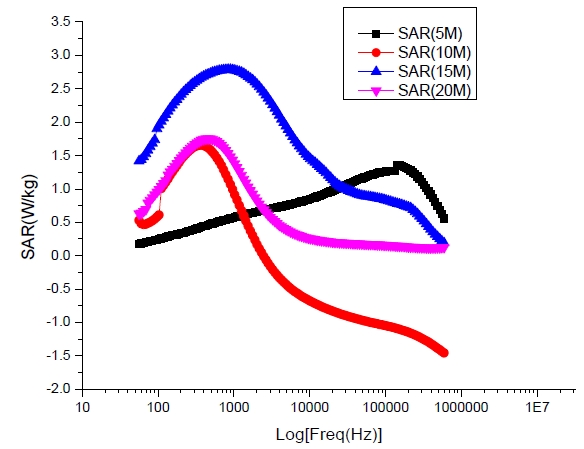
Human blood exposed to irradiation absorbs electromagnetic energy which consequently effect temperature variation. The evaluation of Specific Absorption Rate (SAR) of human blood helps to ascertain the values for optimum laser power, time, and temperature variation for fair therapy to avoid blood-irradiation pollution but to enhance its rheological properties when using lasers. Prior knowledge of blood SAR evaluating its dielectric properties is significant, but this is under investigation. We investigate the appropriate SAR threshold value as affected by temperature variation using fundamental blood dielectric parameters to optimize the effect of low-level laser therapy based on physiological and morphological changes of the stimulated diabetic blood. Studies were carried out with Agilent 4294A impedance analyser at frequencies (40Hz – 30 MHz) and designed cells (cuvettes) comprises of electrodes were used in the pre- and post-irradiations measurements. At different laser power outputs, blood samples were subjected to various irradiation durations using portable laser diode-pumped solid state of wavelength 532 nm. Results showed laser at low energy is capable of moderating morphologically the proportion of abnormal diabetic red blood cells. Hence, there is a significant effect using a laser at low energy, as non-medicinal therapy in controlling diabetic health conditions. The positive biostimulation effects on the irradiated diabetic blood occurred within absorbance threshold SAR values range of 0.140?0.695 W/kg and average temperatures range of 24.2?28.0 0C before blood saturation absorbance peak. There is morphological stimulation at a laser power of 50 mW for an exposure time of 10–15 minutes and 60 mW for 5–10 minutes of laser therapy that demonstrates better blood rejuvenated conditions. This occurred within the threshold SAR of 0.140?0.695 W/kg and average temperatures range of 24.2?28.0 0C. Therefore, the diabetic blood irradiated using laser output powers of 70 and 80 mW during exposure durations of 5,10, 15 and 20 minutes rather bio-inhibits positive blood stimulation which has resulted to crenation due to excessive irradiation.
References
D. J. Jordan, P. Mafi, R. Mafi, M. Malahias & A. El. Gawad, “The Use of LASER and its Further Development in Varying Aspects of Surgery”, Open Medicine Journal 3 (2016) 288.
A. T. Zahra, “Investigating the Effects of Green Laser Irradiation on Red Blood Cells: Green Laser Blood Therapy”, International Journal of Applied Research and Studies (IJARS) ISSN 3 (2014) 1.
N. Suardi, M. Suhaimi, J. M. Mustafa, A. R. Hussein & A. Zalila,“Effect of 460 and 532 nm Laser Light on the Erythrocyte Deformability of Anaemic Blood Samples”, Journal of Physical Science 27 (2016) 85.
M. A. Bhat & V. Kumar, “Calculation of SAR and Measurement of Temperature Change of Human Head Due To The Mobile Phone Waves At Frequencies 900 MHz and 1800 MHz”, Advances in Physics Theories and Applications 16 (2013) 54.
M. A. Bhat, “Health Hazardous of Specific Absorption Rate ( SAR ) of Mobile Phone Tower Waves”, American Research Journal of Physics 5 (2016) 1.
C. D. Bortner, F. M. Hughes, J. A. Cidlowski & N. Carolina, “A Primary Role for K + and N a + Efflux in the Activation of Apoptosis”, Journal of Biological Chemistry 272 (1997) 32436.
C. M. Collins, W. Liu, J. Wang, R. Gruetter, J. T. Vaughan, K. Ugurbil, & M. B. Smith, “Temperature and SAR Calculations for a Human Head Within Volume and Surface Coils at 64 and 300 MHz”, Journal of Magnetic Resonance Imaging 656 (2004) 650.
H. B. Cotler, R. T. Chow, M. R. Hamblin, J. Carroll & M. G. Hospital, “HHS Public Access”, MOJ Orthop Rheumatol 2 (2016) 1.
J. P. Farkas, J. E. Hoopman & J. M. Kenkel, “Five Parameters You Must Understand to Master Control of Your Laser / Light-Based Devices” Aesthetic Surgery Journal, 33 (2013) 1059.
C. Kelemen, S. Chien & G. M. Artmann, “Temperature Transition of Human Hemoglobin at Body Temperature?: Effects of Calcium”, Biophysical Journal 80 (2001) 2622.
V. Kumar, M. Ahmad & A. K. Sharma, “Harmful effects of mobile phone waves on blood tissues of the human body”, Eartern Journal of Medicine 15 (2010) 80.
G. Litscher & D. Litscher, “A Laser Watch for Simultaneous Laser Blood Irradiation and Laser Acupuncture at the Wrist”, Integrative Medicine International Journal, 3 (2016) 75.
A. A. Meesters, A. M. Nieboer, S. Kezic, M. A. Rie & A. Wolkerstorfer, “Parameters in Fractional Laser Assisted Delivery of Topical Anesthetics?: Role of Laser Type and Laser Settings”, Lasers in Surgery and Medicine, 8 (2018) 813.
V. Mikhaylov, “The use of Intravenous Laser Blood Irradiation ( ILBI ) at 630-640 nm to prevent vascular diseases”, Laser Therapy 24 (2015) 15.
J. P. Matthias & G. W. Andrew, “Safety of Ultra-High Field MRI: What are the Specific Risks?”, Current Radiology Reports 2 (2013) 60.
S. J. Gemanam, N. Suardi, S. Mokmeli & I. Mustafa, “Evaluation of the Proper Level of Specific Absorption rate of Human Blood for 532 nm Laser in Blood Low-level Laser Therapy”, Laser Physics 30 (2020) 035601.
G. P. Kenny, R. J. Sigal & R. McGinn, “Body Temperature Regulation in Diabetes”, Temperature” 3 (2016) 119.
M. Soheila, M. Daemi, Z. A. Shirazi, F. A. Shirazi, et al, “Evaluating the efficiency of low level laser therapy (LLLT) in combination with intravenous laser therapy (IVL) on diabetic foot ulcer, added to conventional therapy”, Journal of Lasers in Medical Sciences 1 (2010) 8.
G. O. Adam, B. Y. Park, K. M. Choi, H. S. Kang, & G. B. Kim, “Effects of Ultraviolet Blood irradiation in a Diabetes Rabbit Model”, Journal of Diabetes and Obesity 3 (2016) 1.
T. Sowers, D. Vanderlaan, A. Karpiouk, E. M. Donnelly, E. Smith & S. Emelianov, “Laser Threshold and Cell Damage Mechanism for Intravascular Photoacoustic Imaging”, Lasers in Surgery and Medicine 15 (2018) 446.
G. A. Zalesskaya, E. G. Sambor & A. V. Kuchinskii, “Effect of intravenous laser irradiation on the molecular structure of blood and blood components”, Journal of Applied Spectroscopy 73 (2006) 115.
D. Ravelli, S. Protti & A. Albini, “Energy and molecules from photochemical / photocatalytic reactions. An overview”, Molecules 20 (2015) 1527.
“Guidelines for Prevention of Transfusion-associated Graft-versus-host disease (TA-GVHD)”, Australian and New Zealand Society of Blood Transfusion Ltd., (2011).
O. S. Desouky, “Rheological and Electrical Behavior of Erythrocytes in Patients with Diabetes Mellitus”, Romanian J. Biophysics, 19 (2009) 239.
D. J. Vitello, R. M. Ripper, M. R. Fettiplace, G. L. Weinberg, & J. M. Vitello, “Blood Density Is Nearly Equal to Water Density: A Validation Study of the Gravimetric Method of Measuring Intraoperative Blood Loss”, Journal of Veterinary Medicine 2015 (2015) 152730.
Published
How to Cite
Issue
Section
Copyright (c) 2021 Journal of the Nigerian Society of Physical Sciences

This work is licensed under a Creative Commons Attribution 4.0 International License.