Strengthening the digital fortress: A Pythagorean fuzzy Dombi–Archimedean approach to network security decisions

Authors

  • Haitham Qawaqneh
    Department of Basic Science, Al-Zaytoonah University of Jordan, Amman 11733, Jordan
  • Abdallah Shihadeh
    Department of Mathematics, Faculty of Science, The Hashemite University, Zarqa 13133, PO box 330127, Jordan
  • Wael Mahmoud Mohammad Salameh
    Faculty of Information Technology, Abu Dhabi University, Abu Dhabi, United Arab Emirates
  • Walid Abdelfattah
    Humanities and Social Research Center, Northern Border University, Arar, Saudi Arabia
  • Ikhtesham Ullah
    Department of Mathematics, Abbottabad University of Science and Technology, Havelian, Pakistan
  • Arif Mehmood
    Institute of Numerical Sciences, Gomal University, Dera Ismail Khan, Pakistan
  • Jamil J. Hamja
    Department of Mathematics, College of Mathematical Sciences, Mindanao State University–Tawi-Tawi College of Technology and Oceanography, 7500 Tawi-Tawi, Philippines
  • Celine Tali Malabong
    MSU TCTO Sitangkai Community High School, Secondary Education Department, Mindanao State University Tawi-Tawi College of Technology and Oceanography, 7500 Tawi-Tawi, Philippines

Keywords:

Pythagorean fuzzy set, Dombi operator, Archimedean operator, Network security, Multi-criteria decision making

Abstract

Network-security planning frequently depends on judgments that are imprecise, incomplete, and sometimes internally conflicting. Conventional numerical decision models are effective when assessments are available in exact form; however, they are less expressive when experts must report both supporting and opposing evidence for the same security alternative. This paper develops a Pythagorean fuzzy Dombi--Archimedean aggregation framework for multi-criteria decision making under such conditions. In the proposed model, each expert assessment is represented as a Pythagorean fuzzy number and is aggregated through Dombi-type flexibility functions embedded in an Archimedean operational structure. Within this unified notation, weighted averaging, ordered weighted averaging, hybrid averaging, weighted geometric, ordered weighted geometric, and hybrid geometric operators are introduced. The main algebraic properties of these operators, including closure, idempotency, boundedness, and monotonicity, are established from the operational laws with explicit admissibility requirements. A network-security case study is then presented to rank six candidate security systems with respect to four risk-oriented criteria. The numerical implementation includes tabular computations, a procedural flowchart, sensitivity analysis with respect to the flexibility parameter, and a comparative ranking discussion. The results show that the proposed framework offers a coherent and adjustable mechanism for ranking security alternatives when the available decision information involves hesitation, conflict, and expert uncertainty.
Dimensions

[1] L. A. Zadeh, ``Fuzzy sets'', Information and Control 8 (1965) 338. https://doi.org/10.1016/S0019-9958(65)90241-X.

[2] R. E. Bellman & L. A. Zadeh, ``Decision-making in a fuzzy environment'', Management Science 17 (1970) B-141. https://doi.org/10.1287/mnsc.17.4.B141.

[3] A. Rosenfeld, ``Fuzzy groups'', Journal of Mathematical Analysis and Applications 35 (1971) 512. https://doi.org/10.1016/0022-247X(71)90199-5.

[4] L. A. Zadeh, ``The concept of a linguistic variable and its application to approximate reasoning---I'', Information Sciences 8 (1975) 199. https://doi.org/10.1016/0020-0255(75)90036-5.

[5] J. C. Bezdek, Pattern recognition with fuzzy objective function algorithms, 1st ed., Springer, New York, USA, 1981, 272 pp. https://doi.org/10.1007/978-1-4757-0450-1.

[6] C.-T. Chen, ``Extensions of the TOPSIS for group decision-making under fuzzy environment'', Fuzzy Sets and Systems 114 (2000) 1. https://doi.org/10.1016/S0165-0114(97)00377-1.

[7] T.-Y. Chen, C.-H. Chang & J.-F. R. Lu, ``The extended QUALIFLEX method for multiple criteria decision analysis based on interval type-2 fuzzy sets and applications to medical decision making'', European Journal of Operational Research 226 (2013) 615. https://doi.org/10.1016/j.ejor.2012.11.038.

[8] V. Torra, ``Hesitant fuzzy sets'', International Journal of Intelligent Systems 25 (2010) 529. https://doi.org/10.1002/int.20418.

[9] K. T. Atanassov, ``Intuitionistic fuzzy sets'', Fuzzy Sets and Systems 20 (1986) 87. https://doi.org/10.1016/S0165-0114(86)80034-3.

[10] S. K. De, R. Biswas & A. R. Roy, ``Some operations on intuitionistic fuzzy sets'', Fuzzy Sets and Systems 114 (2000) 477. https://doi.org/10.1016/S0165-0114(98)00191-2.

[11] H. Garg, ``Some series of intuitionistic fuzzy interactive averaging aggregation operators'', SpringerPlus 5 (2016) 999. https://doi.org/10.1186/s40064-016-2591-9.

[12] F. Meng, J. Tang & H. Fujita, ``Linguistic intuitionistic fuzzy preference relations and their application to multi-criteria decision making'', Information Fusion 46 (2019) 77. https://doi.org/10.1016/j.inffus.2018.05.001.

[13] H. Zhao, X. Tan & F. Liu, ``A decision making model based on intuitionistic multiplicative preference relations with approximate consistency'', International Journal of Machine Learning and Cybernetics 12 (2021) 2761. https://doi.org/10.1007/s13042-021-01362-0.

[14] Q. Lei & Z. Xu, ``Chain and substitution rules of intuitionistic fuzzy calculus'', IEEE Transactions on Fuzzy Systems 24 (2016) 519. https://doi.org/10.1109/TFUZZ.2015.2450832.

[15] M. Grabisch, J.-L. Marichal, R. Mesiar & E. Pap, ``Conjunctive and disjunctive aggregation functions'', in Aggregation Functions, Cambridge University Press, Cambridge, UK, 2009, pp. 56--129. https://doi.org/10.1017/CBO9781139644150.004.

[16] T. Mahmood, Z. Ali, S. Baupradist & R. Chinram, ``Complex intuitionistic fuzzy Aczel--Alsina aggregation operators and their application in multi-attribute decision-making'', Symmetry 14 (2022) 2255. https://doi.org/10.3390/sym14112255.

[17] R. R. Yager, Pythagorean fuzzy subsets, 2013 Joint IFSA World Congress and NAFIPS Annual Meeting (IFSA/NAFIPS), Edmonton, Canada, 2013, pp. 57--61. https://doi.org/10.1109/IFSA-NAFIPS.2013.6608375.

[18] A. Hussain, K. Ullah, M. N. Alshahrani, M.-S. Yang & D. Pamucar, ``Novel Aczel--Alsina operators for Pythagorean fuzzy sets with application in multi-attribute decision making'', Symmetry 14 (2022) 940. https://doi.org/10.3390/sym14050940.

[19] R. R. Yager & A. M. Abbasov, ``Pythagorean membership grades, complex numbers, and decision making'', International Journal of Intelligent Systems 28 (2013) 436. https://doi.org/10.1002/int.21584.

[20] M. Z. Reformat & R. R. Yager, Suggesting recommendations using Pythagorean fuzzy sets illustrated using Netflix movie data, 15th International Conference on Information Processing and Management of Uncertainty in Knowledge-Based Systems (IPMU 2014), Montpellier, France, 2014, pp. 546--556. https://doi.org/10.1007/978-3-319-08795-5_56.

[21] S. James & G. Beliakov, Averaging aggregation functions for preferences expressed as Pythagorean membership grades and fuzzy orthopairs, 2014 IEEE International Conference on Fuzzy Systems (FUZZ-IEEE), Beijing, China, 2014, pp. 298--305. https://doi.org/10.1109/FUZZ-IEEE.2014.6891595.

[22] X. Peng & H. Yuan, ``Fundamental properties of Pythagorean fuzzy aggregation operators'', Fundamenta Informaticae 147 (2016) 415. https://doi.org/10.3233/FI-2016-1415.

[23] A. A. Khan, S. Ashraf, S. Abdullah, M. Qiyas, J. Luo & S. U. Khan, ``Pythagorean fuzzy Dombi aggregation operators and their application in decision support system'', Symmetry 11 (2019) 383. https://doi.org/10.3390/sym11030383.

[24] M. Akram, W. A. Dudek & J. M. Dar, ``Pythagorean Dombi fuzzy aggregation operators with application in multicriteria decision-making'', International Journal of Intelligent Systems 34 (2019) 3000. https://doi.org/10.1002/int.22183.

[25] G. Alhamzi, S. Javaid, U. Shuaib, A. Razaq, H. Garg & A. Razzaque, ``Enhancing interval-valued Pythagorean fuzzy decision-making through Dombi-based aggregation operators'', Symmetry 15 (2023) 765. https://doi.org/10.3390/sym15030765.

[26] R. R. Yager, ``Generalized orthopair fuzzy sets'', IEEE Transactions on Fuzzy Systems 25 (2017) 1222. https://doi.org/10.1109/TFUZZ.2016.2604005.

[27] W. Yang & Y. Pang, ``New q-rung orthopair fuzzy partitioned Bonferroni mean operators and their application in multiple attribute decision making'', International Journal of Intelligent Systems 34 (2019) 439. https://doi.org/10.1002/int.22060.

[28] Z. Liu, S. Wang & P. Liu, ``Multiple attribute group decision making based on q-rung orthopair fuzzy Heronian mean operators'', International Journal of Intelligent Systems 33 (2018) 2341. https://doi.org/10.1002/int.22032.

[29] J. Wang, R. Zhang, X. Zhu, Z. Zhou, X. Shang & W. Li, ``Some q-rung orthopair fuzzy Muirhead means with their application to multi-attribute group decision making'', Journal of Intelligent & Fuzzy Systems 36 (2019) 1599. https://doi.org/10.3233/JIFS-18607.

[30] A. Saha, P. Majumder, D. Dutta & B. K. Debnath, ``Multi-attribute decision making using q-rung orthopair fuzzy weighted fairly aggregation operators'', Journal of Ambient Intelligence and Humanized Computing 12 (2021) 8149. https://doi.org/10.1007/s12652-020-02551-5.

[31] J. Dombi, ``A general class of fuzzy operators, the De Morgan class of fuzzy operators and fuzziness measures induced by fuzzy operators'', Fuzzy Sets and Systems 8 (1982) 149. https://doi.org/10.1016/0165-0114(82)90005-7.

[32] A. Sarkar & A. Biswas, ``Development of Archimedean t-norm and t-conorm-based interval-valued dual hesitant fuzzy aggregation operators with their application in multicriteria decision making'', Engineering Reports 2 (2020) e12106. https://doi.org/10.1002/eng2.12106.

[33] J. Fodor, ``Triangular norms, E. P. Klement, R. Mesiar, E. Pap'', Fuzzy Sets and Systems 123 (2001) 399. https://doi.org/10.1016/S0165-0114(01)00093-8.

[34] A. Saha, D. Dutta & S. Kar, ``Some new hybrid hesitant fuzzy weighted aggregation operators based on Archimedean and Dombi operations for multi-attribute decision making'', Neural Computing and Applications 33 (2021) 8753. https://doi.org/10.1007/s00521-020-05623-x.

[35] P. Liu, Z. Ali & T. Mahmood, ``Archimedean aggregation operators based on complex Pythagorean fuzzy sets using confidence levels and their application in decision making'', International Journal of Fuzzy Systems 25 (2023) 42. https://doi.org/10.1007/s40815-022-01391-z.

[36] X. Yang, T. Mahmood, J. Ahmmad & K. Hayat, ``A novel study of spherical fuzzy soft Dombi aggregation operators and their applications to multicriteria decision making'', Heliyon 9 (2023) e16816. https://doi.org/10.1016/j.heliyon.2023.e16816.

[37] T. Senapati, G. Chen, I. Ullah, M. S. A. Khan & F. Hussain, ``A novel approach towards multiattribute decision making using q-rung orthopair fuzzy Dombi--Archimedean aggregation operators'', Heliyon 10 (2024) e27969. https://doi.org/10.1016/j.heliyon.2024.e27969.

[38] A. O. Bajeh, M. O. Olaoye, F. E. Usman-Hamza, I. S. Olatinwo, P. O. Sadiku & A. B. Sakariyah, ``An adaptive neuro-fuzzy inference system for multinomial malware classification'', Journal of the Nigerian Society of Physical Sciences 7 (2025) 2172. https://doi.org/10.46481/jnsps.2025.2172.

[39] U. C. Obini, C. Jeremiah & S. A. Igwe, ``Development of a machine learning based fileless malware filter system for cyber-security'', Journal of the Nigerian Society of Physical Sciences 6 (2024) 2192. https://doi.org/10.46481/jnsps.2024.2192.

[40] A. E. Ibor, D. O. Egete, A. O. Otiko & D. U. Ashishie, ``Detecting network intrusions in cyber-physical systems using deep autoencoder-based dimensionality reduction approach anddeep neural networks'', Journal of the Nigerian Society of Physical Sciences 7 (2025) 2689. https://doi.org/10.46481/jnsps.2025.2689.

[41] S. M. Shagari, D. Gabi, N. M. Dankolo & N. N. Gana, ``Countermeasure to structured query language injection attack for web applications using hybrid logistic regression technique'', Journal of the Nigerian Society of Physical Sciences 4 (2022) 832. https://doi.org/10.46481/jnsps.2022.832.

[42] R. Hatamleh, ``On the form of correlation function for a class of nonstationary field with a zero spectrum'', Rocky Mountain Journal of Mathematics 33 (2003) 159. https://doi.org/10.1216/rmjm/1181069991.

[43] R. Hatamleh & V. A. Zolotarev, ``On two-dimensional model representations of one class of commuting operators'', Ukrainian Mathematical Journal 66 (2014) 122. https://doi.org/10.1007/s11253-014-0916-9.

[44] R. Hatamleh & V. A. Zolotarev, ``On model representations of non-selfadjoint operators with infinitely dimensional imaginary component'', Journal of Mathematical Physics, Analysis, Geometry 11 (2015) 174. https://doi.org/10.15407/mag11.02.174.

[45] R. Hatamleh & V. A. Zolotarev, ``Triangular models of commutative systems of linear operators close to unitary operators'', Ukrainian Mathematical Journal 68 (2016) 791. https://doi.org/10.1007/s11253-016-1258-6.

[46] A. S. Heilat, H. Zureigat, R. Hatamleh & B. Batiha, ``New spline method for solving linear two-point boundary value problems'', European Journal of Pure and Applied Mathematics 14 (2021) 1283. https://doi.org/10.29020/nybg.ejpam.v14i4.4124.

[47] A. Qazza, I. Bendib, R. Hatamleh, R. Saadeh & A. Ouannas, ``Dynamics of the Gierer--Meinhardt reaction--diffusion system: Insights into finite-time stability and control strategies'', Partial Differential Equations in Applied Mathematics 14 (2025) 101142. https://doi.org/10.1016/j.padiff.2025.101142.

[48] T. Qawasmeh, A. Qazza, R. Hatamleh, M. W. Alomari & R. Saadeh, ``Further accurate numerical radius inequalities'', Axioms 12 (2023) 801. https://doi.org/10.3390/axioms12080801.

[49] A. Shihadeh, K. A. M. Matarneh, R. Hatamleh, M. O. Al-Qadri & A. Al-Husban, ``On the two-fold fuzzy n-refined neutrosophic rings for $2leq nleq3$'', Neutrosophic Sets and Systems 68 (2024) 8. https://doi.org/10.5281/zenodo.11406449.

[50] X. Ji, H. Geng, N. Akhtar & X. Yang, ``Floquet engineering of point-gapped topological superconductors'', Physical Review B 111 (2025) 195419. https://doi.org/10.1103/PhysRevB.111.195419.

[51] X. Yang, Y. Feng, A. Wahab & H. Geng, ``Non-Hermitian second-order topological phases and bipolar skin effect in photonic kagome crystals'', Physical Review A 113 (2026) 023506. https://doi.org/10.1103/s26b-8bdl.

[52] R. Raza, A. T. A. Ghani & L. Abdullah, ``An extension of the hesitant fuzzy weight averaging operator-VIKOR method under hesitant fuzzy sets'', Mathematics and Statistics 12 (2024) 359. https://doi.org/10.13189/ms.2024.120407.

[53] P. A. Ejegwa, I. C. Onyeke, B. T. Terhemen, M. P. Onoja, A. Ogiji & C. U. Opeh, ``Modified Szmidt and Kacprzyk's intuitionistic fuzzy distances and their applications in decision-making'', Journal of the Nigerian Society of Physical Sciences 4 (2022) 174. https://doi.org/10.46481/jnsps.2022.530.

[54] H. Qawaqneh, M. S. M. Noorani, H. Aydi, A. Zraiqat & A. H. Ansari, ``On Fixed Point Results in Partial b-Metric Spaces'', Journal of Function Spaces (2021) 8769190. https://doi.org/10.1155/2021/8769190.

[55] H. Qawaqneh, M. S. M. Noorani & H. Aydi, ``Some New Characterizations and Results for Fuzzy Contractions in Fuzzy b-Metric Spaces and Applications'', AIMS Mathematics 8 (2023) 6682. https://doi.org/10.3934/math.2023338.

[56] H. Qawaqneh, J. Manafian, M. Alharthi & Y. Alrashedi, ``Stability Analysis, Modulation Instability, and Beta-Time Fractional Exact Soliton Solutions to the Van Der Waals Equation'', Mathematics 12 (2024) 2257. https://doi.org/10.3390/math12142257.

[57] H. Qawaqneh, H. A. Hammad & H. Aydi, ``Exploring New Geometric Contraction Mappings and Their Applications in Fractional Metric Spaces'', AIMS Mathematics 9 (2024) 521. https://doi.org/10.3934/math.2024028.

[58] M. Elbes, T. Kanan, M. Alia & M. Ziad, ``COVID-19 Detection Platform from X-Ray Images Using Deep Learning'', International Journal of Advanced Soft Computing Applications 14 (2022) 197. https://doi.org/10.15849/IJASCA.220328.13.

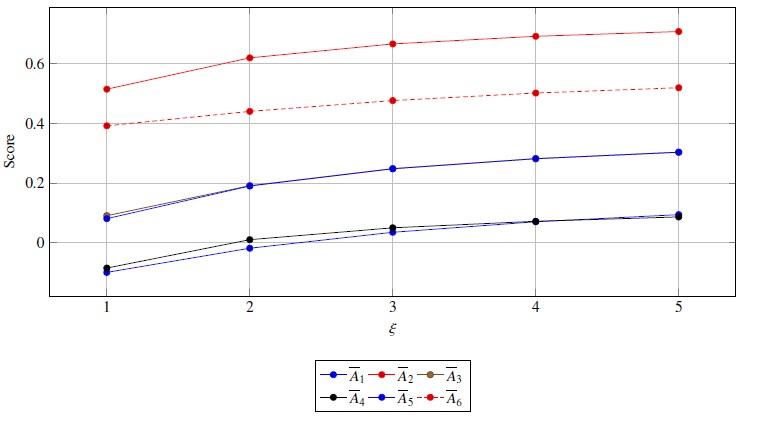
FIG5

Published

2026-09-10

How to Cite

Strengthening the digital fortress: A Pythagorean fuzzy Dombi–Archimedean approach to network security decisions. (2026). Journal of the Nigerian Society of Physical Sciences, 8(4), 3617. https://doi.org/10.46481/jnsps.2026.3617

Issue

Section

Mathematics & Statistics

How to Cite

Strengthening the digital fortress: A Pythagorean fuzzy Dombi–Archimedean approach to network security decisions. (2026). Journal of the Nigerian Society of Physical Sciences, 8(4), 3617. https://doi.org/10.46481/jnsps.2026.3617

Similar Articles

11-20 of 162

You may also start an advanced similarity search for this article.

Most read articles by the same author(s)